Category: Maintenance

  • Why Your Pool Keeps Getting Algae After Shocking and How to Stop It

    Why Your Pool Keeps Getting Algae After Shocking and How to Stop It

    Are you wondering why your pool keeps getting algae even after you’ve shocked it? If algae keep coming back, you’re likely dealing with a problem that goes beyond a one-time treatment. While shocking is an essential part of pool algae treatment, it doesn’t always address the underlying cause. If the underlying issue isn’t corrected, algae can return even after repeated shocking.

    In this guide, we’ll break down the three main reasons your pool keeps getting algae despite repeated shocks. You’ll also learn what each problem means, how to identify it, and the steps you can take to stop algae from coming back long term.

    Reason #1: Inadequate or Ineffective Pool Shocking

    Shocking your pool is one of the most effective ways to kill algae, but it isn’t foolproof. In many cases, the problem isn’t the product itself but how the treatment is done.

    You might even think that shocking is enough. In reality, how you prepare the pool, how much shock you use, and when you apply it all affect whether the treatment eliminates the algae or only knocks it back temporarily.

    Failing to Prep the Pool Before Shocking

    Algae don’t just float in the water. It clings to walls, steps, ladders, and even behind light fixtures, where chlorine has a harder time making direct contact.

    If you shock without brushing these surfaces first, algae attached to those areas may be protected by biofilms, rough surfaces, or crevices that limit chlorine contact. The chlorine treats the surrounding water, but the remaining algae can survive and begin multiplying again, allowing the bloom to return.

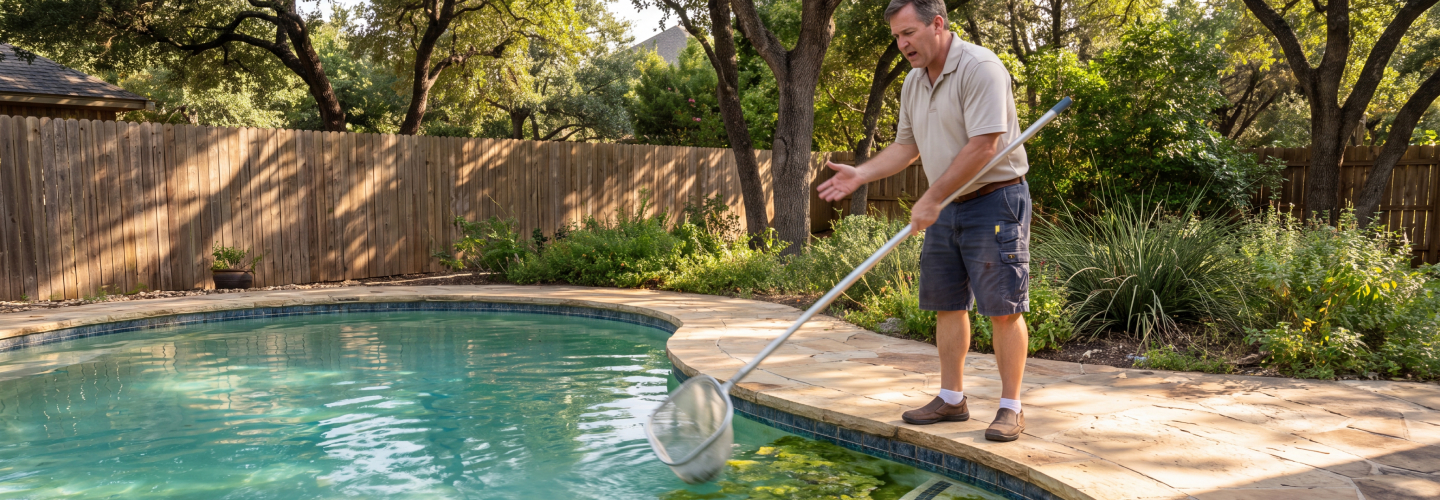
    Before shocking your pool, thoroughly brush all surfaces to loosen algae. Then skim and vacuum any debris so the chlorine can reach and destroy the remaining algae more effectively.

    Not Using Enough Shock

    Using too little shock is one of the most common reasons algae return shortly after treatment.

    Every pool requires a shock dose based on its water volume and the severity of the algae outbreak. If the free chlorine level never reaches the concentration needed to kill the algae completely, some organisms survive and quickly multiply. In many cases, visible algae can return within just one or two days.

    Always follow the manufacturer’s dosage recommendations and adjust the amount when dealing with a severe algae bloom. If algae are already well established, a single shock treatment may not be enough. In many cases, maintaining elevated free chlorine levels until the algae are completely eliminated is more effective than a one-time application.

    Poor Shock Application Timing

    Even if you use the correct amount of shock, treating your pool during the day can significantly reduce its effectiveness.

    Sunlight’s ultraviolet (UV) rays rapidly break down unstabilized free chlorine. Even in pools with cyanuric acid (CYA), which helps protect chlorine from UV light, some free chlorine is still lost during the day.

    For the best results, shock your pool after sunset and let the pump and filter run overnight. This gives the chlorine several uninterrupted hours to work before sunlight begins reducing free chlorine levels the next morning.

    Reason #2: Imbalanced Pool Chemistry Undermines Pool Algae Treatment

    Even a correctly dosed shock treatment won’t fully work if your water chemistry is off. Chlorine needs specific conditions to be effective, and when those conditions aren’t right, pool algae treatment falls short, no matter how much shock you use.

    High Cyanuric Acid (CYA) Levels (“Chlorine Lock”)

    CYA protects chlorine from sunlight, which is useful up to a point. When CYA levels become too high, they reduce the amount of active chlorine available to kill algae efficiently. Many pool owners refer to this as “chlorine lock,” although the issue is actually caused by excessive CYA reducing chlorine’s sanitizing power rather than locking it completely.

    Target range: Generally 30-50 ppm for most outdoor chlorine pools. If your CYA reads well above that range, partially draining and refilling the pool with fresh water is usually the most reliable solution. While chemical CYA reducers are available, they tend to work best for mild elevations and are often less effective when CYA levels are very high.


    Incorrect pH, Alkalinity, or Calcium Hardness

    Chlorine’s effectiveness drops when pH moves outside its working range. High pH reduces the amount of active chlorine available for sanitizing. Low pH, on the other hand, creates water  that is corrosive and uncomfortable for swimmers.. Either way, imbalanced water chemistry makes it more difficult to control algae.

    To keep them within range, keep these levels in mind:

    • pH: 7.2 – 7.6
    • Total Alkalinity: 80 – 120 ppm
    • Calcium Hardness: 200 – 400 ppm for most plaster pools (vinyl-lined and fiberglass pools often require lower calcium hardness levels).

    Test weekly. Adjust with the appropriate increaser or decreaser based on what your results show.

    Phosphates and Nitrates: Algae’s Nutrient Source

    Phosphates and nitrates are nutrients that algae use to grow. They enter the water through rain, leaves, fertilizer runoff, and even from swimmers’ oils, sunscreen, and lotion. When phosphates and nitrates are elevated, algae have a ready food source. While shocking can still kill algae when free chlorine is maintained at the proper level, reducing these nutrients can make it easier to prevent future algae blooms.

    Test for phosphates using a specialized kit available at most pool supply stores. If levels are high, use a phosphate remover and remove leaves and other organic debris regularly to help limit future phosphate buildup.. Regular filter cleaning also helps reduce buildup in the long run.

    Reason #3: Poor Circulation, Filtration, or Hidden Algae Havens

    Good chemistry and correct shock dosing won’t solve a pool algae control problem if water isn’t reaching every part of the pool. Algae grow in still water, and most pools have at least a few spots where circulation is weak.

    Dead Spots and Inadequate Circulation

    Corners, behind ladders, under steps, and around built-in benches are common dead spots. Sanitizer doesn’t reach these areas as effectively as it should, giving algae places to survive even after treatment.

    Adjusting your return jets to push water into those zones is an effective way to improve circulation and help prevent algae growth. Regularly brushing those areas also helps break up algae and biofilms so sanitizer can reach them more effectively. If your pool’s layout makes circulation difficult, an automatic cleaner or additional return jet can make a difference.

    Dirty or Ineffective Filter

    Your filter plays a major role in removing algae from the water, but it can’t do its job if it’s clogged or overloaded.

    After an algae outbreak, the filter traps a large amount of dead algae and other organic debris. If it isn’t cleaned promptly, its efficiency drops, making it harder to remove any remaining algae or contaminants. In some cases, a neglected filter can even contribute to algae returning after what seemed like a successful treatment.

    Clean or backwash your filter after an algae treatment, following the manufacturer’s recommendations. Cartridge filters should be rinsed thoroughly or soaked in a manufacturer-approved filter-cleaning solution to remove trapped debris. Skipping this step is one of the most common reasons algae reappear shortly after treatment.

    Algae Hiding in Equipment and Accessories

    The pool itself isn’t the only place where algae can survive. Pool toys, nets, vacuum heads, brushes, pool floats, and even swimsuits can carry algae back into clean water. It’s a tiny detail that gets missed most of the time.

    After an algae outbreak, clean and disinfect reusable pool equipment before using it again. Many pool owners use a properly diluted bleach solution or another appropriate disinfectant, following the product label directions. Wash swimsuits according to the garment care label, and don’t forget to clean skimmer baskets, pool covers, and any other accessories that came into contact with the contaminated water.

    How to Break the Cycle (Step-by-Step Solutions)

    Breaking a recurring algae problem means addressing chemistry, cleaning, and filtration at the same time. It’s more than just a one-time cleaning.

    Test and Balance Water Before Shocking

    Before adding any shock, test your water and correct whatever is off:

    • pH: target 7.2–7.6
    • Total Alkalinity: target 80–120 ppm
    • CYA: target 30–50 ppm for most outdoor chlorine pools
    • Free Chlorine: know your current level so you can raise it appropriately during treatment

    Shocking unbalanced water can reduce the effectiveness of the treatment and make it more difficult to eliminate algae completely.

    Brush, Vacuum, and Remove Debris Thoroughly

    Brush all surfaces: walls, floor, steps, ladders, corners. Pay special attention to areas with poor circulation, such as behind ladders, under steps, and around benches. Vacuum the floor slowly so you pick everything up that’s been loosened. Finally, skim leaves and other floating debris from the surface before shocking. These actions help chlorine reach and destroy algae more effectively.

    Shock the Pool Correctly

    Use the right amount based on algae type and severity. Always follow the manufacturer’s directions for your specific shock product. Some granular shocks are broadcast directly into the pool, while others may require pre-dissolving according to the label. For best results, shock after sunset and let the pump run overnight.

    Run Filter Nonstop and Clean It After Treatment

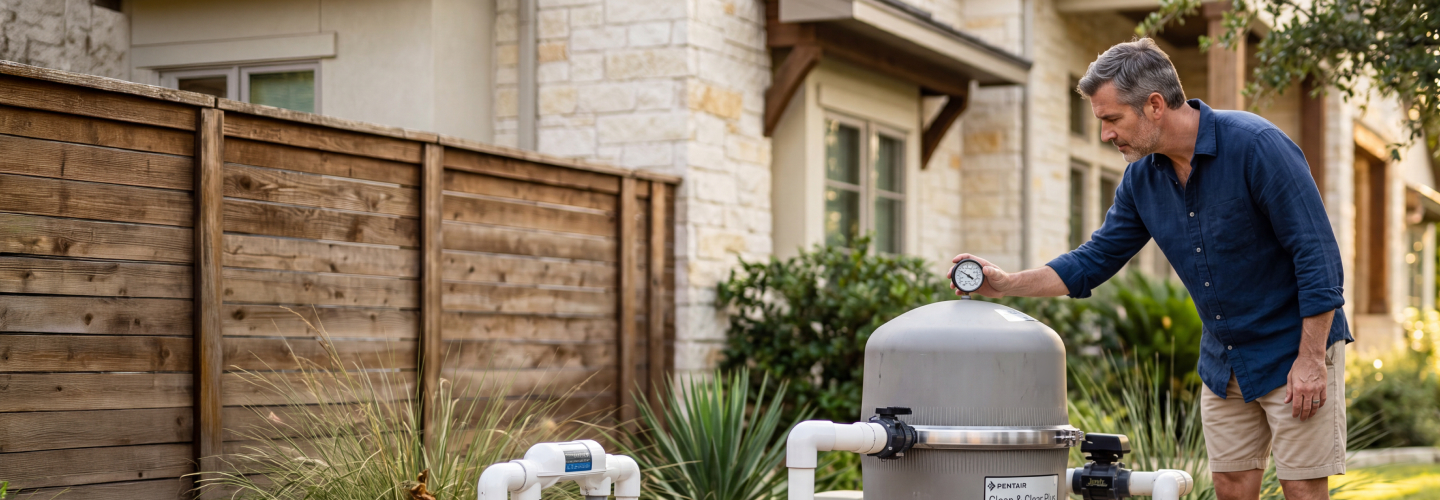
    Run your filter continuously for 24-48 hours after shocking. Clean or backwash it as needed, following the manufacturer’s recommendations and whenever the filter pressure indicates it’s time. Empty skimmer and pump baskets frequently during this period.

    Continuous filtration helps remove dead algae and suspended debris from the water, improving water clarity and reducing the chance of algae returning.

    Repeat Testing and Maintenance

    Retest chemical levels about 24 hours after shocking. Then test again every couple of days for the following week. Watch for cloudiness or surface slime because these are early signs that algae may be returning.

    Consistent weekly maintenance, including maintaining proper sanitizer levels, testing water chemistry, brushing, vacuuming, cleaning the filter, and ensuring good circulation, is what helps prevent algae from coming back.

    Frequently Asked Questions

    1) Why does my pool stay green after shocking?

    Your pool stays green even after shocking for one or more of these common reasons

    • The algae bloom required a higher chlorine level or longer treatment than a single shock application provided
    • Poor water circulation or filtration
    • Chemistry that’s out of range (especially pH or high CYA)
    • A filter that is clogged or overwhelmed with dead algae

    Check all four before adding more shock to your pool.

    2) Why does algae keep coming back in my pool?

    Algae keep coming back because the original outbreak wasn’t completely eliminated or because the conditions that allowed algae to grow weren’t corrected. Either the chemistry isn’t balanced before shocking, circulation or filtration is inadequate, or algae remain on pool surfaces or are reintroduced through equipment and accessories. Overlooking even one step in the treatment process can allow algae to return.

    3) Is it safe to swim in a pool with algae?

    It is absolutely not safe to swim in a pool with algae. Algae make pool surfaces slippery, reduce water clarity, and can indicate that sanitizer levels are not adequately controlling microorganisms. Poor visibility also makes it harder to see swimmers or hazards beneath the water.Wait until the algae is completely gone and your sanitizer levels are back in the normal range before letting anyone get in to swim.

    4) Can pool algae damage equipment or surfaces?

    Yes. Pool algae can damage equipment and surfaces by clogging filters, increasing strain on pumps, and contributing to stains on plaster, vinyl liners, or other pool finishes if left untreated.

    Treating pool algae promptly is always the best way to help prevent unnecessary wear and damage to your pool and equipment.

    5) Should I use algaecide after shocking?

    Algaecide works well as a follow-up after a major outbreak because it helps kill remaining algae and reduce the chance of regrowth. Add it after shocking, not before, unless the product label specifically directs otherwise, so high chlorine levels don’t reduce its effectiveness. Use a non-foaming formula and follow the dosage instructions on the label.

    Take Control and Enjoy an Algae-Free Pool

    When a pool keeps getting algae, it’s usually a combination of these things; shock that didn’t have the right conditions to work, chemistry that was off, circulation that left some areas untreated, or equipment that reintroduced algae after cleanup. The solution for these issues shouldn’t be complicated, but it rather requires handling all three areas in one, such as:

    • Effective shocking
    • Balanced water chemistry
    • Consistent circulation and filtration

    Skip one of these, and the other ones don’t fully hold.

    If you’ve tried several treatments and your pool is still not clearing up, that’s the right time to finally bring in a professional. Poolie serves pool owners across Texas with inspections, treatments, and pool maintenance that go further than what a standard shock routine can handle. Reach out by filling out the form below, and let’s figure out what action your pool truly needs.
  • Chlorine Lock: Why Your Pool Chlorine Stops Working (and How to Fix It)

    Chlorine Lock: Why Your Pool Chlorine Stops Working (and How to Fix It)

    You add chlorine, you wait, and test the water; only to find your chlorine level is still low. One possible culprit is chlorine lock. This happens when cyanuric acid (CYA) builds up to the point where it significantly reduces chlorine’s sanitizing effectiveness, leaving your pool looking fine on the surface but it’s not properly protected.

    This problem shows up most often in the summer, especially in July. Between the intense heat, stronger UV exposure, and frequent chlorine use, CYA levels can climb quickly and throw your pool chemistry out of balance.

    This article explains what pool owners commonly refer to as chlorine lock, what causes it, how to spot the warning signs, and how to restore your pool’s chlorine effectiveness.

    What is Chlorine Lock? (And Why July Is the Breaking Point)

    Chlorine lock is the common name for a condition where cyanuric acid (CYA) levels become so high that they significantly reduce chlorine’s sanitizing effectiveness. Adding more chlorine at that point may not solve the problem unless the chlorine level is increased appropriately for the amount of CYA present or the CYA level is reduced.

    July is when this problem tends to surface most often. Intense sunlight, heavier swimmer traffic, and frequent chlorine treatments all become more common during the peak of summer. Since many stabilized chlorine products also add CYA, those levels can creep up over time until they begin interfering with your pool’s sanitizer.

    How CYA Works in Pool Water

    CYA serves an important purpose. It protects chlorine from being broken down too quickly by the sun’s UV rays. Without enough CYA, chlorine can disappear within hours on a hot Texas summer day, making it difficult to maintain proper sanitation.

    The key is keeping CYA within the right range. For most pools, around 30–50 ppm provides effective UV protection without significantly reducing chlorine’s performance. As CYA climbs above 70–80 ppm, a larger portion of the chlorine becomes temporarily bound to the stabilizer. While it’s still present in the water, less of it is immediately available to sanitize contaminants. That’s when the symptoms commonly referred to as “chlorine lock” begin to appear.

    Why Problems Spike in July

    A few things happen in July that don’t happen the same way in May or September:

    • Pools require more chlorine. Higher temperatures, longer days, and stronger UV exposure increase chlorine demand. Many homeowners respond by adding more stabilized chlorine tablets or shock, which gradually raises CYA levels.
    • Stabilized chlorine products add more CYA.
      Trichlor and dichlor products both contain CYA. Using them regularly through the season compounds what’s already in the water.
    • Heavy use means more contaminants. More swimmers, more sunscreen, more organic matter, all of which demand more from your chlorine, often leading to more frequent chlorine additions throughout the summer.

    A pool that tested fine back in May can quietly cross 100 ppm CYA by midsummer, often before anyone notices that something is off.

    Signs You Have a Chlorine Lock Problem

    The most telling sign of what many pool owners call chlorine lock is that your pool doesn’t respond to chlorine the way it should. Instead of improving after treatment, the water remains difficult to sanitize, often leading to cloudy water, algae growth, unpleasant odors, and swimmer discomfort.

    Chlorine Levels Don’t Improve the Pool

    You shock the pool, wait a few hours later, test the water again, and the water still doesn’t improve despite having measurable chlorine. That’s not normal. If your free chlorine level is consistently too low for your CYA level, or your pool continues to struggle despite adding chlorine, excessive cyanuric acid (CYA) may be reducing chlorine’s effectiveness.

    Algae, Cloudy Water, and Irritation

    When chlorine isn’t sufficiently active, it can’t keep algae, bacteria, and other contaminants under control. As a result, algae will begin to grow, the water may turn cloudy, and swimmers may experience red eyes or skin irritation. These issues often persist even after adding more chlorine because much of the chlorine is bound to CYA and less is immediately available to sanitize the water.

    Pool Test Results: High CYA, Low Free Chlorine

    High CYA alongside free chlorine that is too low for the measured CYA level  is one of the clearest diagnostic signals. Test over several consecutive days and write down the numbers. If the pattern holds, you’re not dealing with a one-time issue. You’re dealing with a chlorine lock.

    Strong Chlorine Odor (But No Sanitizing Power)

    If you notice a sharp smell coming off the water, it only means that you have an unclean pool. More often, it points to chloramines, which form when chlorine tries to react with contaminants such as sweat, oils, and ammonia compounds. The odor is essentially a sign that chlorine is being consumed faster than it can fully sanitize the water, and it usually means your pool needs more effective sanitation—not less chlorine.

    Diagnosing Chlorine Lock Like a Pro

    To determine whether high CYA is reducing your chlorine’s effectiveness, you need to test more than just free chlorine. You need to look at CYA, total chlorine, pH, and alkalinity together, then rule out anything else that could explain the numbers.

    Test Your CYA Level

    Use a dedicated CYA test, which is included in most comprehensive pool test kits. For most outdoor pools, the recommended CYA level is 30–50 ppm for most outdoor pools, though saltwater pools often operate in the 60–80 ppm range according to manufacturer recommendations.

    . If your reading is 80 ppm or higher, excess stabilizer may be reducing chlorine’s effectiveness and contributing to the symptoms commonly referred to as chlorine lock.

    Test Free, Combined, and Total Chlorine

    Each chlorine measurement tells you something different about your pool’s condition:

    • Free chlorine is the active sanitizer available to kill bacteria and algae.
    • Combined chlorine represents chlorine that has already reacted with contaminants to form chloramines.
    • Total chlorine is the sum of free and combined chlorine.

    If your free chlorine level is consistently too low for your CYA level, or your pool continues experiencing algae or cloudy water despite maintaining measurable free chlorine, excessive CYA may be contributing to the problem. Elevated combined chlorine can also indicate that your pool is struggling to keep up with contaminants.

    Check pH and Alkalinity

    Before blaming CYA, make sure your water balance is within the recommended range. Pool pH should sit between 7.2 and 7.6, while total alkalinity should be 80–120 ppm.

    High pH alone can significantly reduce chlorine’s sanitizing power, even when CYA is perfectly fine. Correcting pH and alkalinity first helps ensure you’re identifying the real cause of the problem rather than treating the wrong issue.

    Rule Out Other Problems

    Not every chlorine problem is caused by excess CYA. Debris, leaves, and organic matter can consume chlorine fast. A clogged filter or underperforming pump can also make chemistry problems worse.

    Before concluding that chlorine lock is the culprit, clean the pool, inspect your filtration system, and confirm your circulation equipment is working properly. Eliminating these common issues will give you a more accurate picture of what’s happening in your pool.

    How Pros Fix Chlorine Lock in Summer

    How to break the chlorine lock in a pool starts with addressing the underlying cause: excessive cyanuric acid (CYA). Once your CYA level is back under control, you can restore your pool’s sanitizing power and rebalance the water. Following these steps in order helps avoid wasting time, chemicals, and money.

    Step 1: Lower Cyanuric Acid (CYA)

    The most reliable method is a partial drain and refill. Drain and replace enough water to bring your CYA back into the recommended range. For moderately elevated CYA, this may require replacing 25–50% of the water. Higher CYA levels may require a larger water replacement.

    Commercial CYA-reducing products are available, but their performance can vary depending on pool conditions. For significantly elevated CYA levels, a drain and refill is generally the fastest and most reliable solution.

    Step 2: Restore Chlorine Effectiveness

    Once your CYA is back in the recommended range, adjust your free chlorine to the proper level based on your CYA concentration. If combined chlorine exceeds 0.5 ppm, follow your shock product’s directions or use breakpoint chlorination to eliminate chloramines.

    Step 3: Rebalance pH and Alkalinity

    Draining and refilling change your water’s baseline chemistry. Fresh water has its own pH and alkalinity. Test both right after the refill and get them dialed in before anything else goes into the pool. Chlorine performs better when the rest of the chemistry isn’t working against it.

    Step 4: Prevent Future CYA Buildup

    Test CYA about once a month during the swimming season, or after extended use of stabilized chlorine products, significant water replacement, or if you’re having trouble maintaining proper chlorine levels.

    How to Prevent High CYA (Chlorine Lock)

    To prevent chlorine lock all season, a pool chemical service schedule that includes regular CYA testing will catch problems before they become worse.

    Use the Right Chlorine Products

    Stabilized chlorine (trichlor tablets or dichlor shock) is useful when CYA is in range. When levels start climbing, switch to unstabilized options like liquid chlorine or calcium hypochlorite because neither of them adds CYA. Check product labels for terms like “stabilized” or “contains cyanuric acid” before adding anything to the water.

    Test Your Water Regularly

    Check your CYA level periodically throughout the swimming season, especially if you regularly use stabilized chlorine products. Also test your free chlorine, pH, and alkalinity on a routine basis so you can catch water chemistry issues before they become bigger problems.

    Monitor Water Loss and Top-Offs

    Topping off seems harmless, but it adds up. The dissolved chemicals, CYA included, stay behind while the water level drops, so refilling just makes them more concentrated. Keep track of how often you’re adding water and how much of it. After anything more than a minor top-off, run your tests again before assuming the current chemical routine still fits.

    When Should You Call a Pool Professional?

    Some situations are harder to resolve without professional help:

    • CYA is above 100 ppm, and repeated partial drains haven’t brought it down
    • Free chlorine won’t hold even after correct dosing
    • Algae keep coming back despite proper chemical additions
    • You’re not sure whether the issue is CYA, equipment, or something else

    A pool chemical service visit usually includes a full water panel test, equipment check, and a targeted treatment plan, not just a bag of shock.

    Frequently Asked Questions About Chlorine Lock

    1) Can I fix the chlorine lock without draining my pool?

    Yes, in some cases. Chemical CYA reducers may help when CYA levels are only slightly elevated, although results can vary depending on pool conditions. Once CYA gets above 80–100 ppm, a partial drain and refill is usually the more reliable solution. For severely elevated CYA, draining and replacing water is generally the fastest and most effective way to restore proper water chemistry.


    2) How often should I test Chlorine in summer?

    At a minimum, test your chlorine 2–3 times per week during the summer. For pools that get heavy use or a lot of sun, daily testing is even better. Always test after heavy rain, large pool parties, algae treatment, or shocking the pool.

    3) What’s the best Chlorine level for my pool?

    The ideal free chlorine level depends on your CYA level, but most residential pools should maintain between 1–4 ppm of free chlorine, with 2–4 ppm being a common target. Pools with higher CYA require proportionally higher free chlorine levels to maintain effective sanitation.

    4) Are Chlorine reducers worth it?

    For mild CYA problems, they’re a reasonable first option. However, their effectiveness can vary, and results aren’t guaranteed. When CYA is severely elevated, a partial drain and refill is typically faster, more predictable, and more effective than multiple chemical treatments.

    Outsmarting Chlorine Lock in July

    Chlorine lock is not the kind of problem that fixes itself. The longer elevated CYA sits in the water, the more chlorine you’ll burn through without results. Regular testing is the most practical thing you can do to catch rising CYA early, so you’ll almost always avoid the bigger fix.

    If you’ve already gone through the steps and the water still isn’t responding, that’s when it makes sense to bring in help.

    Poolie’s team handles how to fix chlorine lock situations regularly and can get your pool’s water chemistry sorted without trial and error. Fill out the form below and get your pool back to where it should be.

  • Pool Pump Overheating: 5 Warning Signs to Watch for This July

    Pool Pump Overheating: 5 Warning Signs to Watch for This July

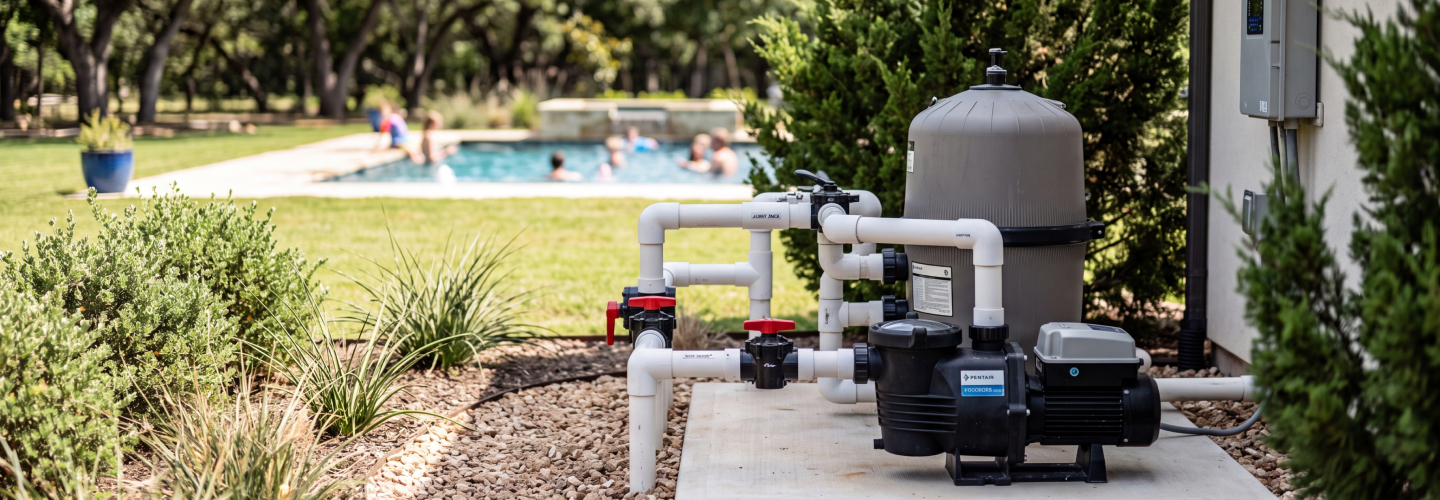
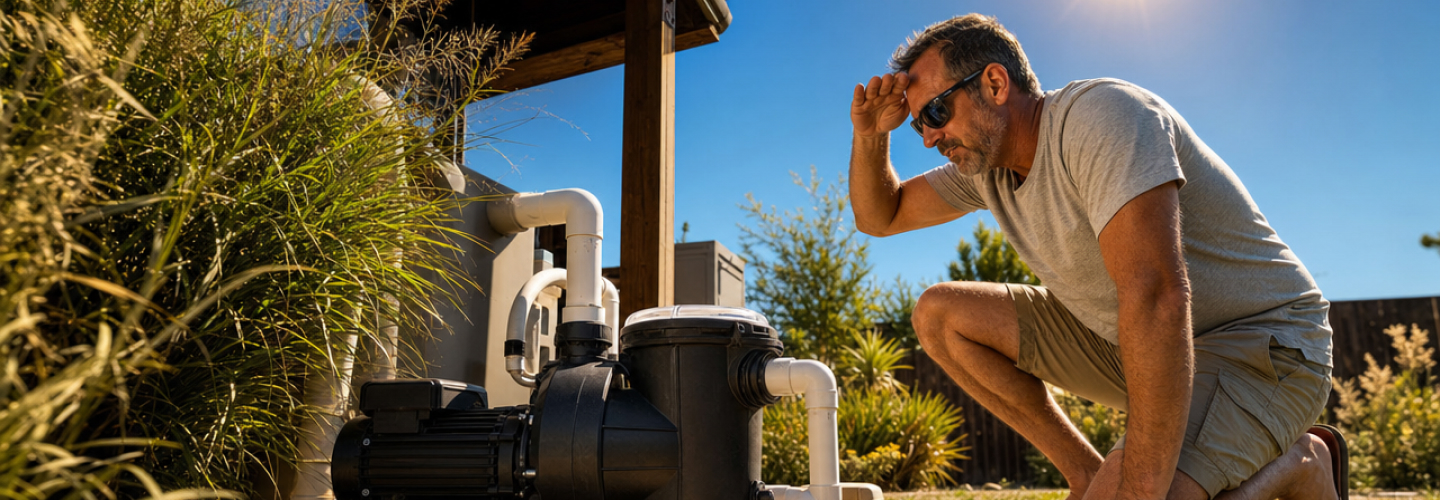
    Is your pool pump motor running hotter than it should? That’s one of the first signs your pool pump may be overheating. It usually happens when you combine scorching outdoor temperatures, restricted water flow, longer run times, or poor ventilation around the equipment.. In places like Texas, July is when this problem shows up most often. Many overheating problems don’t happen without warning. Instead, they usually show small, easy-to-miss signs first. If you know what to look for, you can often address the problem before it leads to expensive motor repairs or replacement.

    In this guide, we’ll walk you through the five most important warning signs, what causes them, and what you can do about them.

    Why Pool Pump Overheating Peaks in July

    Overheating peaks in July because it is when heat, pool usage, and run times are at their highest point at once. Temperatures stay above 100°F for days in a row. Even under normal conditions, a running pump motor naturally generates heat, and when the surrounding air is already extremely hot, it has a harder time shedding that excess heat.. When the surrounding air is already so hot, there’s no way for extra heat to escape. If the equipment pad receives direct afternoon sun or has poor ventilation, temperatures around the motor can climb even higher.

    At the same time, you’re using the pool more. The days are longer, so there are more people swimming, and more leaves and dust end up in the water. As a result, many pools that run around 8 hours per day in the spring may benefit from 10 to 12 hours of circulation during the hottest part of summer, depending on the pool, equipment, and water conditions. Heat alone is usually manageable, and longer run times aren’t necessarily a problem by themselves. But when high temperatures, extended operation, restricted water flow, or poor ventilation occur together, even well-maintained equipment can begin to show signs of strain.

    5 Signs Your Pool Pump is Overheating

    An overheating pool pump often shows one or more warning signs before it fails. Common symptoms include strange noises, weak water flow, sudden shut-offs, a motor that feels excessively hot or smells like it’s burning, and visible leaks or warped components.

    1. Unusual or Loud Noises from the Pump

    A healthy pump sounds like a steady, low hum. If you start hearing grinding, screeching, or rough rattling, something inside the motor or pump is likely wearing out. Excessive heat can break down bearing lubrication and increase friction, causing bearings and other moving components to wear faster. Left unchecked, those noises usually become louder as the damage progresses.

    2. Weak Water Flow or Low Suction

    Weak water flow and overheating often go hand in hand. Restricted water flow forces the pump to work harder, which can contribute to overheating.

    • Pool jets pushing water with much less force than usual
    • The skimmer basket stops pulling in leaves and debris
    • Air bubbles appearing in the basket or coming out of the pool returns

    A slow drop in flow might mean there’s a blockage, a dirty filter, an air leak, or another issue making the pump work harder. Left unresolved, those conditions can increase motor temperatures and accelerate wear.

    3. Frequent Shut-Offs or Tripped Breakers

    Most newer pool pumps have built‑in protection. If the motor gets too hot, it automatically cuts power to save itself. One random shut‑off on the hottest afternoon of the year might not be a big deal. But if it keeps turning off, or if your circuit breaker trips every day or two, it means that there is an underlying problem.

    If the breaker has tripped, reset it once after allowing the motor to cool and check for obvious issues like clogged baskets or a dirty filter. If the breaker continues to trip, stop using the pump and have it inspected.

    4. Hot Pump Housing or Burning Smell

    The pump casing will feel slightly warm when it’s running normally, and that’s totally fine. But if it’s too hot to comfortably keep your hand near or briefly on the motor housing for more than a second or two, the motor is running way past its safe limit.

    Tip: Check it with the back of your hand, held close, and don’t press directly against the surface to avoid getting burnt.

    5. Leaks, Melting, or Deformation

    When heat stays high for too long, it damages the pump from the outside in, too. Seals start to loosen and drip, while plastic parts soften and lose their shape. During your weekly check‑ups, keep an eye out for:

    • New puddles of water beneath the pump
    • Warped or discolored fittings
    • Softened or cracked plastic components

    If you see any of these, the pump may already have sustained heat-related damage.. At that point, it’s best to have a professional look it over to see what can be saved.

    What Causes Pool Pump Overheating?

    Pool pump overheating is often caused by a combination of environmental conditions, mechanical or electrical problems, and operating or maintenance habits. It’s rarely the result of a single factor.

    Environmental Factors

    High air temperatures, direct sunlight, and restricted airflow around the equipment make it more difficult for the motor to dissipate heat, increasing the risk of overheating.

    • Add shade using a canopy or slatted fence panel
    • Clear away leaves, boxes, or plants so air can move freely around the pump
    • If adding shade, be sure it doesn’t restrict airflow around the equipment.

    Mechanical and Electrical Causes

    Anything that blocks water flow or forces its components to work harder can generate excess heat. Common causes include:

    • Clogged skimmer baskets, pump baskets, or filters
    • Worn bearings that create excess friction
    • Old or damaged electrical wiring
    • A dirty or failing pump impeller
    • Low water level allowing air into the system

    Restricted flow is one of the most common contributors to overheating, but it’s also one of the easiest to prevent. Clean skimmer baskets, pump baskets, and filters regularly to keep water moving efficiently. You should also pay attention to unusual noises that may indicate worn bearings. An annual inspection by a qualified pool professional can also help identify worn electrical connections, failing bearings, or other developing issues before they lead to overheating.

    User Errors

    Sometimes, the biggest contributor to pump overheating is how it is operated. Some of the most common mistakes include:

    • Running the pump during the hottest part of the afternoon
    • Skipping cleanings because the water still looks clear
    • Ignoring new or unusual noises and putting off inspection

    Fortunately, these are easy habits to change. Run your pump during the cooler morning or evening hours whenever possible, stick to a regular cleaning schedule regardless of how clear the water looks, and address unusual noises right away before they turn into more expensive repairs.

    What are the Hidden Dangers of an Overheating Pool Pump?

    The hidden dangers of an overheating pool pump include permanent motor damage, electrical hazards, and declining water quality that can eventually become unsafe for swimmers. A quick check costs almost nothing compared to dealing with any of these consequences:

    Permanent Motor and Pump Damage

    The motor is usually the first part to suffer. When temperatures stay too high, the motor’s winding insulation can break down, bearings can wear prematurely, and seals and other components may fail. Over time, these issues can lead to complete motor failure. Watch for these signs of serious damage:

    • The pump won’t start again even after it’s cooled down
    • It continues making grinding or screeching noises when restarted.
    • You smell something burnt coming from the casing

    Addressing the problem early may prevent more extensive damage. Waiting too long increases the likelihood of costly repairs or motor replacement.

    Electrical Hazards and Fire Risk

    Excessive heat can gradually degrade the insulation around electrical wiring and motor windings. . In the long run, this raises the chance of short circuits, tripped breakers, and, in extreme cases, fire. In Texas, most pool equipment sits right next to homes and dry summer grass. If you notice a burning smell or a breaker that repeatedly trips, turn off power to the pump and contact a qualified pool equipment technician or electrician.


    Water Quality and Health Concerns

    Good circulation is what keeps your water safe. When an overheating pump slows down or stops completely, chlorine and sanitizer can’t spread evenly. During hot summer weather, algae can begin developing within a day or two if circulation and sanitation are interrupted. Taking care of your pump is the same as taking care of your water.

    How to Keep Pool Pump from Overheating: July Prevention Checklist

    To help keep your pool pump from overheating, build a few simple maintenance habits into your routine. These steps can significantly reduce the risk of a mid-summer breakdown.:

    1) Inspect and Clean Regularly

    Check skimmer baskets, pump baskets, and filters every week. Even a small amount of debris slows water flow and forces the motor to work overtime. Backwash or rinse your filter as recommended by the manufacturer, or sooner if the filter pressure rises significantly or there’s been a storm.

    2) Improve Equipment Ventilation

    Provide shade when practical while maintaining plenty of airflow around the equipment.. A slatted cover or canopy works perfectly. Make sure nothing is stacked against the pump and plants aren’t growing too close around it.

    3) Run Pumps During Cooler Hours

    If your schedule allows, run more of your pump’s circulation during the cooler morning or evening hours to reduce heat stress on the motor. However, make sure the pump still runs long enough during the day to maintain proper water circulation and sanitation, especially during periods of heavy pool use.

    4) Check for Leaks and Wear

    Every time you do maintenance, take a quick look at seals, hoses, and fittings. A small drip now is easy and cheap to fix. Ignoring leaks can reduce system efficiency, allow air into the plumbing, or place additional strain on the pump, increasing the risk of overheating over time. Replacing a worn seal costs little. Ignoring it until the motor seizes costs a lot more.

    5) Schedule Professional Pool Motor Repair or Maintenance

    Book a service visit in late spring, right before the heat really kicks in. A trained technician can spot things you might miss, like worn bearings, loose electrical connections, or early signs of heat damage. Regular upkeep can easily add years to your pump’s life.

    What to Do if Your Pool Pump is Overheating

    If you notice signs of trouble, follow these simple steps first: turn the pump off, let it cool down completely, then look for obvious maintenance issues before attempting to restart it. Acting quickly can mean the difference between a quick clean‑out and a major repair.

    Immediate Steps

    Turn the pump off and let it rest. Don’t try to restart it while it’s still hot; that only adds more stress. Once it’s cool enough to touch safely:

    • Empty out the skimmer and pump baskets to remove any blockages
    • Check the ground underneath for water or leaks
    • Look and smell for any signs of overheating, such as a burning odor coming from the motor or electrical components.

    If it was just a clogged basket, clear it out, turn it back on, and monitor it during the next operating cycle for any recurring symptoms.. If anything still feels off, stop and get help instead of pushing it.

    When to Do DIY vs. Call for Pool Motor Repair

    You can safely handle the basics yourself: cleaning filters, emptying baskets, and tightening a loose fitting. But call a pool motor repair expert right away if you see any of these:

    • It keeps shutting off or tripping breakers even after cleaning
    • You smell burning coming from the motor or the electrical box
    • Parts look melted, warped, or misshapen
    • Water flow stays weak no matter what you do
    • The motor hums but won’t start.
    • You see sparks or smoke

    Debris issues are easy to fix yourself. Heat-related motor damage and electrical repairs should be handled by a qualified pool equipment technician or electrician.

    Frequently Asked Questions (FAQ)

    1) Can a pool pump overheating affect my pool’s water chemistry?

    Yes. If an overheating pump slows down or shuts off, water circulation is reduced. Without proper circulation, chlorine and other pool chemicals can’t distribute evenly, which can increase the risk of cloudy water, algae growth, and poor sanitation. After the pump is repaired, test and rebalance the water as needed.

    2) Does the type of pool pump (single-speed vs. variable-speed) affect overheating risk?

    Because they often run at lower speeds, variable-speed pumps typically generate less heat and place less strain on the motor than single-speed pumps. While any pump can overheat if airflow or water flow is restricted, variable-speed models generally operate more efficiently.

    3) How long should a pool pump run each day during hot weather?

    Most residential pools need about 8 to 12 hours of circulation per day during the hottest months, although the ideal run time depends on factors such as pool size, weather, bather load, and equipment. Many homeowners choose to run more of their circulation during the cooler morning or evening hours, but make sure the pool still receives enough circulation to maintain water quality throughout the day.

    4) Can landscaping or pool enclosure design help prevent pool pump overheating?

    Absolutely, as long as you don’t block airflow. Shrubs, fences, and open shade structures keep the sun off the equipment. Just make sure whatever you use still lets air move around it. Lattice panels and slatted covers work great because they give shade without trapping heat.

    5) Can I prevent overheating with smart sensors or monitors?

    Some smart pool systems and pump controllers can monitor pump performance, water flow, power usage, or equipment status and alert you if something isn’t operating normally. While most residential systems don’t directly monitor motor temperature, they can help you identify problems before they lead to overheating.

    Stay Cool: Protect Your Pool Equipment This July

    Every sign we’ve covered, from a new noise to a slightly warped fitting, is just your pump asking for a little attention before it stops working entirely. Make it a habit to check your equipment just as often as you test your water.

    Poolie offers inspections, maintenance, and repairs all summer long across Texas. One quick visit now can make sure your pump is ready to handle the hottest weeks ahead. Fill out the form below or give us a call, and let us take the worry out of keeping your pool running smoothly.

  • Swimming Pool Pump Maintenance: How High Bather Loads Strain Your System

    Swimming Pool Pump Maintenance: How High Bather Loads Strain Your System

    Have you ever noticed how a pool that’s been fine all summer suddenly turns cloudy the Monday after a big weekend? It almost always comes down to how many people were actually swimming in the pool. That’s where proper swimming pool pump maintenance becomes essential because the more swimmers there are, the harder your system has to work to keep the water clean and balanced.

    In this guide, we’ll explain how heavy pool use affects your circulation and filtration system, why pool sanitation becomes more challenging after periods of high use, when it’s time to schedule a pool filter cleaning service, and how it will affect your overall pool maintenance routine.

    Understanding Bather Load and Its Role in Swimming Pool Pump Maintenance

    Bather load is the number of people swimming in your pool over a stretch of time, and it directly affects water quality and your pool’s circulation and filtration system. More swimmers equate to more oils, sweat, sunscreen, and general debris hitting the water at once. This is why swimming pool pump maintenance shouldn’t follow the exact same schedule year-round, especially during periods of heavy pool use.

    Defining Bather Load in Pool Maintenance

    At home, this usually looks like a family swimming a couple of times a week, with the occasional spike when people come over. Commercial pools are in a different category entirely because hotels, gyms, and community centers may have dozens or even hundreds of swimmers each day, placing significantly greater demands on their circulation, filtration, and sanitation systems.

    Key Factors That Influence Bather Load

    A handful of things tend to drive the bather load up (or keep it low), such as:

    • Parties and get-togethers, which bring in extra sunscreen and body oil all at once
    • Hot weather, since people naturally want to swim more when it’s cruel outside
    • Smaller pools hit their limit faster with fewer people
    • Summer weekends and holidays being the usual culprits

    Special events can spike bather load fast, sometimes without much warning. Knowing which weekends are likely to be busy at least gives you a chance to prepare ahead of time.

    How Bather Load Stresses Pool Systems and Increases Maintenance Needs

    When more people are in the water, your circulation and filtration system have to process a much higher volume of contaminants. Your filter collects debris more quickly, and chlorine is consumed faster as it works to sanitize the water. If these increased demands aren’t addressed, you may end up with cloudy water, reduced sanitizer levels, and a filter that requires cleaning more frequently.

    None of this requires a complete overhaul. All you need to do is tighten up your cleaning frequency and check your equipment often when you know a busy stretch is coming.

    How High Bather Loads Affect Your Pool Pump

    High bather loads affect your pool pump and filtration system because they increase the amount of contaminants that must be circulated, filtered, and sanitized.. It continuously moves water through the filter, distributes sanitizers and chemicals evenly, and helps maintain consistent water quality. When more people use the pool, the system has to process more debris and organic contaminants, which can cause the filter to clog more quickly and reduce water flow if maintenance is neglected. Over time, operating with restricted flow can place additional strain on the pump.

    Increased Circulation Demands and Debris Management

    Swimmers carry sunscreen, hair, body oils, and whatever’s stuck to their feet from the yard. The more people are in the pool, the more all of that stuff ends up in the water. This increases the amount of material your filtration system must remove and may require longer pump run times or more frequent filter cleaning to maintain clear water.

    Signs Your Pool Pump Needs Maintenance After Heavy Use

    After a busy stretch, it’s worth checking for a few things:

    • Grinding or screeching sounds from the pump housing
    • Weak flow from of the jets
    • Air bubbles showing up in the basket or return jets
    • The pump losing prime, or shutting off on its own for no clear reason
    • Visible debris jammed into the basket

    If you catch these early, you can often resolve the problem with simple maintenance, such as emptying the pump basket, cleaning the filter, or reseating a worn O-ring. Addressing restricted water flow early helps prevent unnecessary strain on the pump, reducing the risk of overheating or premature motor wear. A quick walk-around after a big weekend is all it takes to catch these issues.

    Essential Swimming Pool Pump Maintenance Tips During High Bather Loads

    A few habits can make a real difference. Empty the pump basket daily while usage is high. Check that the lid and O-ring are sealed properly so air isn’t being drawn into the system. Keep an eye on your filter pressure gauge, as a rising pressure reading can indicate that the filter is becoming clogged and restricting water flow.. Running the pump a little longer than usual helps improve water circulation, filtration, and sanitizer distribution after periods of heavy pool use. However, if you continue noticing poor circulation, unusual noises, low water flow, or the pump repeatedly loses prime, it’s probably time to have a qualified pool professional take a look.

    Pool Filter Challenges: Keeping Up with High Bather Loads

    Keep monitoring the filter because it traps everything that circulates through the filtration system. When bather traffic spikes, it’s the first piece of equipment to show signs of strain.

    How High Bather Loads Stress Your Pool Filter

    More people in the pool mean more hair, oil, and general debris for the filter to catch. Once that load gets heavy enough, the filter fills up faster than it normally does. Flow drops, the pressure gauge climbs higher than usual, and the water starts to look duller even though the pump is running just fine.

    Common Issues and When to Call a Pool Filter Cleaning Service

    If your pool stays cloudy despite regular cleaning, the return jets feel weaker than usual, the filter pressure remains high even after backwashing, or cleaning the filter, or you notice leaks around the filter housing, it’s time to take a closer look. When these problems persist despite routine maintenance, it’s often a sign that a deeper cleaning or inspection is needed. A professional pool filter cleaning service can disassemble the filter, remove stubborn buildup that isn’t accessible during routine cleaning, and identify worn or damaged components before they lead to more costly repairs.

    DIY Pool Filter Cleaning vs. Hiring a Pool Filter Cleaning Service

    Rinsing a cartridge or backwashing sand and DE filters as recommended by the manufacturer is fine for regular maintenance. These are things that owners can handle on their own. However, after a big event or when high filter pressure or poor water flow continues despite routine maintenance, that’s the time to call for a professional visit. A professional deep cleaning can restore filter performance and help identify problems before they become major repairs.

    Maintaining Pool Sanitation with Elevated Bather Loads

    Maintaining pool sanitation during periods of heavy use starts with keeping sanitizer levels where they need to be. Sanitizers are your primary defense against bacteria, algae, and other contaminants, but they’re consumed much faster when more people are using the pool because they must both sanitize the water and oxidize the additional organic contaminants introduced by swimmers.. Regular testing and timely adjustments help ensure the water stays clean, clear, and safe for everyone.

    Impact on Sanitizer Levels and Water Quality

    Every swimmer brings in sweat, sunscreen, and bacteria. Because of that, chlorine or bromine levels are consumed faster. Once the sanitizer falls too low, the water can become cloudy, develop unpleasant odors, and become more susceptible to algae growth. It can also result in skin and eye irritation for swimmers.

    Risks of Poor Pool Sanitation During Busy Periods

    This is about more than just water appearance. Germs like E. coli or Cryptosporidium can spread when sanitizer levels drop too low or become ineffective. It can result in rashes, ear infections, or even stomach issues for swimmers. That’s why sanitizer checks matter so much more right after a party than during a slow week.

    Monitoring and Adjusting Pool Sanitation for Optimal Safety

    Test the water before and after high-use periods, whether that’s with strips or a digital tester. Add sanitizer right away if levels drop below where they should be. A shock treatment after a big event can help oxidize contaminants and restore water quality, and if manual testing isn’t your thing, automatic chlorinators or smart monitors can take some of that off your plate.

    Proactive Swimming Pool Pump Maintenance for Before, During, and After Peak Usage

    Proactive swimming pool pump maintenance before, during, and after peak pool usage means preparing your equipment ahead of time monitoring your pool system during periods of heavy use, and performing follow-up maintenance once the pool returns to normal use.

    Preparing Your Pool for High Bather Loads

    As the weekend approaches and you know your pool is going to be busy, a little prep can help keep the water clear and reduce stress on your filtration system. Shock the pool the evening before or a day or two before if appropriate for your sanitizer levels, skim, and vacuum so the system starts clean. Also, don’t forget to empty the pump and skimmer baskets so the flow is not restricted. Finally, backwash or rinse the filter beforehand and run the pump a bit longer than usual during and immediately after periods of heavy use.

    Real-Time Pool Sanitation and Filter Checks

    While the event is happening, test sanitizer and pH every few hours. Watch out for sudden jumps in filter pressure. If the water starts looking cloudy or the jets weaken, address the issue promptly by checking water chemistry, emptying baskets if needed, and ensuring the circulation system is operating properly.


    Post-Event Pool Filter Cleaning Service and Maintenance Checklist

    Once things settle down, clear out debris, empty the baskets, backwash the filter, and retest the water. Check the pump and filter for anything unusual, such as noise, leaks, and the like. If cloudiness or high pressure sticks around even after all that, consider calling in a pool filter cleaning service instead of troubleshooting it yourself for another week.

    Long-Term Best Practices for Swimming Pool Pump Maintenance and Pool Sanitation

    Regular, ongoing care is what prevents most emergency repairs, not any single fix. Treat it less like a one-time tune-up and more like a weekly habit. These habits matter more over the course of a swimming season than people usually give them credit for.

    Scheduling Regular Pool Pump and Filter Inspections

    Once a month works fine for most residential pools, though it’s worth bumping that up to every two weeks during the busy season. During each check, look for odd noises, leaks near fittings, pressure readings that seem off, debris buildup, and any wear on seals or hoses.

    When to Schedule Professional Pool Equipment Maintenance

    DIY care covers routine maintenance, but a professional visit once or twice a year for most residential pools catches things that are easy to overlook. Commercial pools typically require much more frequent inspections and maintenance due to higher bather loads and local health regulations. When choosing a pool filter cleaning service, look for someone certified and insured with strong local reviews. Most importantly, ask upfront about what’s included in the service before you book anything.

    Keeping a Maintenance Log for Swimming Pool Pump Maintenance and Pool Sanitation

    A simple log, whether using a notebook or an app, can make it easier to spot patterns and plan ahead. Just jot down dates, what got checked or fixed, and anything that seemed off. It sounds unnecessary until it saves you from forgetting when a part was last replaced.

    Protect Your Pool with Proactive Pump Maintenance and Sanitation

    Busy pool days should leave you with great memories and not costly repairs. Every extra swimmer increases the demand on your pump, filter, and sanitizer, making regular maintenance essential to keeping your water clean and your equipment running efficiently. Staying ahead of small issues with routine inspections, timely chemical adjustments, and proper cleaning can extend the life of your pool system and help you avoid expensive breakdowns.

    If your pump isn’t performing as it should or your filter is struggling to keep the water clear, don’t wait for the problem to get worse. Poolie can inspect your system, identify the root cause, and recommend the right solution. Fill out the form below to schedule an assessment and keep your pool ready for every swim.

  • Cloudy Pool Water After Heavy Use: Causes, Fast Fixes & Prevention Guide

    Cloudy Pool Water After Heavy Use: Causes, Fast Fixes & Prevention Guide

    Cloudy pool water after heavy use can show up at the worst time, like the morning after a pool party when you expected everything to be back to normal. Cloudy water is more than a pool’s aesthetic issue. It often means your pool’s filtration system or water chemistry couldn’t keep up with the extra swimmer load. If it’s left unaddressed, it can reduce water clarity and make it harder to maintain a clean and safe swimming environment.

    In the sections ahead, we’ll reveal why cloudy pool water after heavy use happens, what to do about it, how to address it right away, and what are the best ways to prevent it.

    Understanding Cloudy Pool Water

    Cloudy pool water occurs when fine particles remain suspended in the water because there are more contaminants than the filter can efficiently remove or because the water chemistry is out of balance.. As a result, instead of achieving clear water, you’re left with something hazy. This is typically a chemistry and filtration problem, which usually shows up right after a pool experiences heavy use.

    What Is Cloudy Pool Water?

    Cloudy pool water is a water condition where your pool appears to be dull, milky, or foggy instead of looking clear and sparkling. It can also appear as a light haze that is barely visible unless you were intentionally looking for it.

    Why Does Heavy Use of the Pool Lead to Cloudiness?

    Using your pool heavily leads to cloudiness because more people in the water means more sweat, sunscreen, body oils, and outside debris are dumped all at once. This sudden increase in contaminants places additional demand on both your pool’s sanitizer and filtration system.

    Heavy swimmer use puts your pool’s water chemistry under more strain. Free chlorine gets used up faster as it works to break down everything swimmers bring into the water. As chlorine levels drop, more fine particles and contaminants remain in the water for your filter to remove. If the filter can’t keep up with the extra load, or if the water chemistry becomes unbalanced, the water starts to turn cloudy.

    Main Causes of Cloudy Pool Water After Heavy Use

    Cloudy pool water after heavy use is usually due to increased contaminants, depleted sanitizer levels, an overworked filtration system, or a combination of all these. Identifying the underlying cause helps you choose the right solution and restore clear water faster.

    Chlorine and Sanitizer Demand Spike

    When many swimmers enter the pool at the same time, chlorine is depleted much faster than usual. Every person introduces sweat, body oils, sunscreen, and other contaminants into the water, forcing chlorine to work harder to neutralize them. This increased workload is known as chlorine demand, and it can quickly reduce the amount of free chlorine available to keep your pool clean and properly sanitized.

    If your sanitizer can’t keep up with the increased demand, contaminants will start to accumulate instead of breaking down. As a result, the water starts looking cloudy. The longer sanitizer levels remain too low, the more difficult it becomes to restore proper water balance, so it’s best to address the problem as soon as you notice something isn’t right.

    Oxidant Demand and Organic Contaminants

    Sweat, body oils, lotion, and bits of debris tracked in from the yard all contribute to what’s known as oxidant demand. Basically, it’s a measure of how much organic junk your water has to deal with at any given time.

    Regular chlorine levels are sometimes not enough for a sudden spike like that, so superchlorinating (shocking) the pool after a party is still highly recommended, instead of treating the shocking process as optional. This provides enough additional sanitizer to oxidize accumulated contaminants and restore free chlorine levels more quickly.


    Filtration System Under Stress

    Your filter can only handle so much at a time. After a busy day, it might be dealing with more debris and fine particles than it was designed to handle, and that slows everything down.

    It might also show warning signs before performance drops. You may notice weaker water flow, a higher pressure reading, or dirt returning to the pool after cleaning. If any of that sounds familiar, cleaning or backwashing the filter (if applicable to your filter type) should be your next move.

    Equipment Stress Points

    Filters are not the only components feeling the strain during periods of heavy pool use. Pumps have to circulate water longer to keep up with the added contaminants, chlorinators dispense more sanitizer as chlorine levels drop, and skimmers collect more debris. This extra workload can reduce efficiency over time and lead to faster wear.

    After a party, spend a few minutes checking skimmer baskets and emptying them if needed to prevent clogs. Make sure your filter pressure remains within its normal operating range,, and confirm your chlorinator is dispensing sanitizer properly to help keep contaminants under control.

    Environmental and Weather Factors

    The weather has a way of making an already busy pool even worse. Rain, wind, and heavy pollen can add extra debris and organic material to your pool, making your systems have even more to handle.

    Storms tend to stir up dirt that has already settled. Windy days bring their own problem, blowing in grass clippings, dust, leaves, or other airborne debris you wouldn’t normally see. Keeping a pool cover on hand and staying ready to skim after weather rolls through can go a long way toward maintaining water clarity, particularly in a place with unpredictable weather.

    Step-by-Step: How to Clear Cloudy Pool Water After Heavy Use

    Clearing cloudy pool water after heavy use starts with testing, then treating things in the right order. Most pools can show noticeable improvement within a day or two, though the more serious issues can take a bit longer.

    Test Your Pool Water Immediately

    Testing tells you exactly what’s out of balance before you start dumping chemicals into the pool. Focus on:

    • Chlorine or sanitizer level
    • pH
    • Total alkalinity
    • Calcium hardness
    • Cyanuric acid (if your pool uses stabilizer)

    Low chlorine combined with an improper pH is the most common reason for cloudy water. If you’re unsure how to interpret your results , most pool supply stores can run the test for you and walk you through what it means.

    Shock the Pool (Superchlorination)

    Shocking means adding a large dose of chlorine or a non-chlorine oxidizer to break down the contaminants your regular sanitizer couldn’t keep up with. Most shock products are made to bring free chlorine up to somewhere around 10 ppm for a standard pool, but it’s still recommended to read the label and follow the manufacturer’s instructions.

    If you’re using granular shock, always add the chemical to a bucket of pool water if the product label requires pre-dissolving, never water the chemical. Liquid chlorine can be added directly to the pool according to the label instructions. Always keep the pump running while the shock circulates.  The water might actually look a little worse for a few hours right after, as particles start breaking apart, but it should begin clearing up within a day.

    Brush and Vacuum Thoroughly

    Brushing knocks loose particles and algae stuck to the walls, steps, and floor before they can settle back down. Work through the whole pool with a firm-bristle brush rather than hitting just a few random spots.

    Once you’ve brushed, vacuum slowly and go over the whole pool. Manual vacuums take more time but often reach corners and tight spaces that automatic cleaners can miss. If you’re using an automatic cleaner, empty the debris bag or canister before and after cleaning so it can collect debris efficiently.

    Run the Filter Continuously

    Your filter needs more time to recover from a party. Backwash or clean it when the filter pressure rises about 20–25% above the clean starting pressure, rather than on a fixed schedule, unless the manufacturer recommends otherwise.

    While cartridge filters may only need a rinse, sand or DE filters should be properly cleaned. A clean filter running continuously can significantly speed up water recovery and help clear cloudy water more quickly.

    Use Clarifiers or Flocculants (If Needed)

    If the water remains hazy after shocking and filtering, a clarifier or flocculant can help. Clarifiers group tiny particles together so your filter can catch them. Meanwhile, flocculants make particles clump and sink so you can vacuum them out directly.

    When using a flocculant, turn off the pump overnight to allow suspended particles to settle at the bottom of the pool. The next day, vacuum the debris directly to waste, if your filtration system allows,. Be sure to follow the manufacturer’s dosing instructions, as using too much flocculant can worsen water clarity and make the cleanup process more difficult.

    Retest and Rebalance Chemicals

    When water starts to look clearer, retest before letting anyone back in the pool. A general rebalancing checklist looks like this:

    • Chlorine or sanitizer: 1 – 3 ppm (or follow your sanitizer manufacturer’s recommendations)
    • pH: 7.4 – 7.6
    • Total alkalinity: 80 – 120 ppm
    • Calcium hardness: 200 – 400 ppm
    • Cyanuric acid: 30 – 50 ppm (for outdoor pools)

    Adjust whatever needs adjusting before declaring that the job is done.

    Advanced Troubleshooting: Cloudy Water Treatment

    This is where the cloudy pool water treatment solutions need to go past the basics we’ve already covered because when the usual fixes don’t do the trick, the problem is more likely something a standard test kit won’t catch, such as high phosphates, metals, or equipment that’s quietly failing.

    If you encounter persistent cloudiness, then it might be time to take a thorough look at your water and your equipment. A professional water analysis can spot phosphates, metals, or stabilizer issues that home kits miss more often. Consider also bringing a pool professional in to physically inspect your pump, filter, and chlorinator.

    Prevention: How to Avoid Cloudy Water After Heavy Use

    Preventing cloudy water takes a lot less effort than waiting for worse situations before fixing it. All it needs is a bit of preparation before and after your events.

    Pre-Party Preparation

    Balance your chlorine, pH, and alkalinity a day or two before the upcoming event so your pool will be in good condition. A preventative shock the evening before the event can also help, especially before large gatherings or periods of heavy pool use, giving your sanitizer levels a head start. While you’re at it, check your filter and empty the skimmer and pump baskets if needed and clean the filter if it’s due for maintenance.

    During the Party: On-the-Spot Tips

    Encourage guests to rinse off before getting into the pool. It helps reduce the amount of sunscreen and body oils that end up in the water. It also helps to keep the foods and drinks away from the pool edge and skim off visible debris throughout the day.

    Immediate Post-Party Actions

    Skim the surface and empty the baskets as soon as the last guest leaves. Shock the pool the same night, and get the filter running immediately instead of waiting until the next morning. Testing the water that evening or the following morning gives you a head start on spotting any imbalances that need to be addressed.

    Ongoing Maintenance Best Practices

    A weekly routine of testing, brushing, checking filter pressure, and even keeping a simple log of your readings is highly encouraged to help prevent cloudy pool water.

    Frequently Asked Questions (FAQ)

    1) Why is my pool water cloudy?

    Your pool may become cloudy because of low sanitizer, an off pH, or a filter that’s not working well. After a gathering or an event, the extra sweat, oils, and debris from swimmers can push your pool’s chemistry out of range faster than it would on a normal day.

    2) How to clear cloudy pool water fast?

    Test the water first, then follow with shocking, brushing, vacuuming, and running the filter continuously for 24 to 48 hours. Add a clarifier or flocculant if it’s still hazy after all that. Most pools will show improvement within a day.

    3) Can I use household chemicals to clear my pool?

    No. Household chemicals can be harmful for your pool. They can damage pool surfaces or throw your pool chemistry off. Only use pool-specific chemicals for the safety of both your pool and your swimmers.

    Stay away from using:

    • Household bleach that isn’t labeled for pool use
    • Vinegar
    • Ammonia-based cleaners
    • Dish soap or laundry detergent

    4) What if my pool is still cloudy after shocking?

    If your pool is still cloudy after shocking, retest your water to confirm that chlorine, pH, and alkalinity are in the right range. Check the filter for clogs or a worn cartridge, brush and vacuum again, and look through the skimmer and pump baskets for obstructions. If none of that clears the water within a few days, it’s time to call in a professional to rule out high calcium hardness, elevated phosphates, algae, or filtration problems.

    5) How long does it take to clear cloudy pool water?

    Most pools clear up within 24 to 48 hours when they’re treated properly and promptly. If the problem is left untreated, it may take significantly longer to restore water clarity. Running the filter continuously and staying on top of testing during that window will help speed up recovery.

    Keep Your Pool Crystal Clear After Every Party

    Clearing cloudy pool water is easier once you identify the cause. Targeting the right chemistry level, filtration, and consistency is what it takes to achieve clear water, whether you’re dealing with cloudy water right now or wanting to stay ahead of the next one.

    If you want to have more effective pool maintenance, Poolie’s team can handle the testing, treatment, and equipment checks for you. Fill out the form below, and we’ll get your water back on track before the next gathering rolls around.

  • Calcium Buildup in Pool: Causes, Removal, Prevention & When to Call a Pro

    Calcium Buildup in Pool: Causes, Removal, Prevention & When to Call a Pro

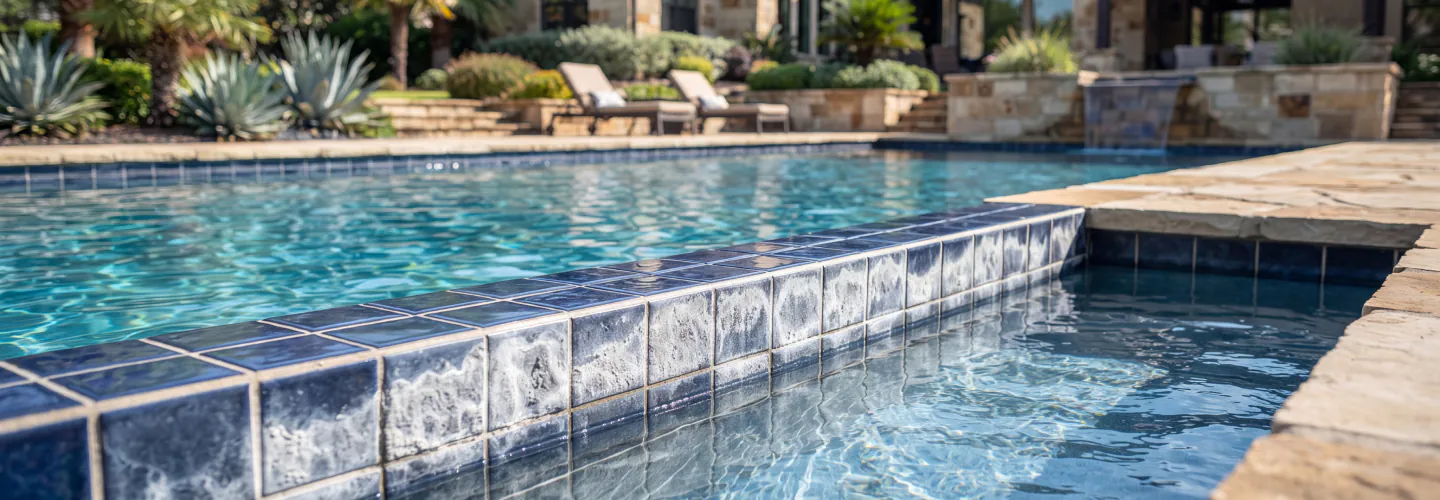
    The white, crusty stuff along your waterline isn’t always dirt. A lot of people scrub it for weeks before realizing it won’t come off with ordinary cleaning alone. Calcium buildup in pool surfaces is something most Texas owners run into. It usually happens after periods of high heat and evaporation, especially when the pool’s water chemistry isn’t properly balanced. As water evaporates, dissolved calcium becomes more concentrated, increasing the likelihood of scale forming. It creeps up slowly, and by the time it’s obvious, it’s already hardened into something a sponge can’t easily remove.

    In the next sections, we’ll discuss where calcium buildup comes from, what it actually does to your pool in the long run, and what your options are for dealing with it.

    Understanding Calcium Buildup in Pools

    Before you can fix calcium buildup, you need to fully understand what calcium buildup is and why it forms. Some pool owners notice the symptom before understanding the cause, realizing that scrubbing alone rarely solves anything. Let’s begin by looking at what calcium buildup is truly about and why it forms.

    What is Calcium Buildup?

    Calcium buildup (also called calcium scale) occurs when pool water becomes oversaturated with calcium minerals, causing calcium compounds to come out of the water and harden onto pool surfaces. It usually appears as a chalky white deposit along tile lines or pool walls.

    Two types of calcium scaling show up most often:

    • Calcium carbonate: It is the white, flaky kind, usually tied to high pH or alkalinity, or elevated calcium hardness. It is generally the easier type of scale to remove.
    • Calcium silicate: A gray, denser deposit that bonds more strongly to pool surfaces and is much more difficult to remove. It often develops over time in pools with consistently high calcium hardness and elevated pH.

    Causes of Calcium Scale

    A handful of things usually line up at once when scale starts forming:

    • High calcium hardness
    • High pH
    • High total alkalinity
    • Hot weather that speeds up evaporation, concentrating dissolved minerals in the water
    • Hard fill water used to replace evaporation losses
    • Areas with poor water circulation, which can encourage localized scale formation

    Texas water leans hard in a lot of regions, so this tends to be more of an ongoing issue here than somewhere else with softer water. Once the chemistry becomes oversaturated with calcium, calcium carbonate can precipitate out of solution and form deposits on pool surfaces, especially around the waterline and tile.

    How Calcium Buildup Affects Your Pool

    Calcium buildup does more than affect your pool’s appearance. If left untreated for too long, it can gradually reduce the performance of your pool equipment and contribute to surface deterioration, leading to costly repairs. Many pool owners assume calcium scale is only a cosmetic issue because it often starts as a few white, chalky deposits around the waterline or on the tiles. However, once scale begins to form, it typically won’t go away on its own. Instead, it continues to spread, becoming thicker and harder to remove while affecting other areas of your pool.

    Aesthetic and Structural Issues

    Calcium buildup can make your pool look older and poorly maintained. Pool tiles lose their shine, surfaces become dull, and rough, chalky deposits develop along the waterline and other submerged areas. In severe cases, the pool floor and walls may even feel rough to the touch.

    The damage isn’t limited to what you can see. Scale can accumulate in grout lines, tiny cracks, and other small openings in your pool’s surface. Over time, these deposits can make surfaces more difficult to clean and may contribute to the deterioration of already weakened grout or tile joints. As the buildup becomes more stubborn, removing it often requires professional cleaning methods rather than simple brushing.

    Long-Term Consequences

    Beyond appearance, calcium buildup can reduce the efficiency of your pool system. Scale can build up on filter media, restrict water flow, and accumulate inside plumbing, pumps, heaters, and salt chlorination cells. As a result, your equipment has to work harder to keep the pool clean and properly circulated. That added strain can shorten the lifespan of pumps, filters, heaters, and other essential components, increasing maintenance and replacement costs over time.

    Addressing calcium buildup early is almost always more affordable than waiting until extensive damage occurs. Regular maintenance and timely professional cleaning can help preserve your pool’s appearance, protect its equipment, and prevent expensive repairs that could have been avoided.

    DIY Methods for Removing Calcium Buildup

    If you have enough time and the right tools, you can manage to handle mild to moderate buildup. However, heavier, longstanding scales are different. Trying to fix it on your own and using the wrong tools can do more harm than good. If you choose to DIY,  be mindful of the proper methods and the right tools you’ll use.

    Basic Cleaning Tools and Supplies

    Here’s what you’ll need before getting started:

    • Pumice stone (for glazed pool tile only) or a calcium scale pad rated for your pool surface – helps remove stubborn calcium deposits when used on compatible surfaces.
    • Pool-safe acid-based tile cleaner, or vinegar if the buildup is light – loosens and dissolves light calcium carbonate deposits, making scrubbing easier.
    • Gloves and eye protection – protect your skin and eyes when handling cleaning solutions.
    • Soft-bristle brush – scrubs away loosened buildup without scratching your pool tile.
    • Garden hose – rinses away calcium deposits after scrubbing.

    Note: Never skip gloves and goggles. The few minutes it takes to put them on is well worth protecting your skin and eyes from cleaning solutions, especially acid-based products.


    Step-by-Step DIY Cleaning Process

    The steps below will teach you everything you need to know from prep to post-cleaning care. Make sure to follow the steps religiously to avoid leaving buildup behind.

    Gather Your Supplies

    Prepare everything together before you start: your cleaning solution, brush, gloves, and hose. Stopping halfway through because you forgot something can cause delays.

    Test a Small Area First

    Find a spot that’s not obviously visible and try your cleaner there first. You want to make sure that it won’t discolor or mess up the tile before you clean the entire pool with it.

    Apply Cleaning Solution

    Put the solution directly on the deposits and let it sit based on the recommended time. It needs time to soak into the actual buildup to be effective, so work in small sections instead of applying the cleaner to the entire area at once.


    Scrub the Affected Areas

    Next is to use the pumice stone or a scale pad in controlled motions. Use steady pressure instead of doing aggressive scraping. Applying too much force can scratch or damage some pool surfaces.

    Rinse and Inspect

    Rinse thoroughly to remove any remaining cleaner and loosened calcium deposits. Older and more stubborn buildup may require multiple cleaning cycles before it is completely removed.

    Repeat as Needed

    If you can still see calcium deposits after the first pass, repeat the cleaning steps. Calcium silicate deposits tends to need more than one treatment.

    Post-Cleaning Maintenance

    Once the pool is clean, test your water and rebalance the pH, total alkalinity, and calcium hardness. If you skip this step, you’re only removing the visible buildup while leaving the conditions that caused it in the first place. Without correcting the water chemistry, calcium scale is likely to return.

    Professional Pool Tile Cleaning Services

    It’s best to call a professional if the buildup is past what a pumice stone and a weekend afternoon’s work can fix.

    When Should You Call a Professional?

    Here are a few signs that you need help from a pool cleaning professional:

    • You notice calcium scale that won’t budge no matter how many times you scrub
    • There’s significant buildup across a large portion of the pool
    • You notice rough surfaces, stained tile, or deteriorating grout around areas with heavy scale.
    • You don’t have the time or physical ability to do it yourself

    Waiting until your pool is already in poor condition gives scale more time to build up, making the eventual cleanup much more difficult than if you’d called sooner.

    How Do Pool Tile Cleaners Remove Calcium Scale?

    Professional pool tile cleaners use specialized methods to remove calcium scales that ordinary DIY techniques often can’t handle. One of the most effective is bead blasting, which uses tiny glass beads to gently break apart stubborn calcium deposits while minimizing the risk of damaging properly installed pool tile when performed correctly.

    Depending on the severity of the buildup, professionals may also use commercial-grade acid solutions that are stronger and more effective than products typically available to homeowners. Combined with the right equipment and experience, these methods remove calcium deposits more thoroughly while minimizing the risk of scratching, etching, or otherwise damaging your pool’s surfaces.

    What to Expect from a Pool Tile Cleaning Service

    Most pool tile cleaning service visits begin with an inspection of the buildup. The cleaning then begins and may take anywhere from a few hours to a whole day, depending on your pool size and the amount of scale.

    When choosing a service provider, look for a brand with actual experience in calcium removal, upfront pricing, and positive reviews from their customers.

    Preventing Future Calcium Buildup in Pools

    Removing the existing buildup is only half the job. Preventing it from returning takes consistent maintenance and properly balanced pool water.

    Pool Chemistry Maintenance

    Testing your pool water weekly during the busy season helps identify problems before scale has a chance to develop. Make sure that the calcium hardness, pH, and total alkalinity stay within the recommended ranges.

    Routine Cleaning and Maintenance Tips

    A few habits can go a long way, such as:

    • Brushing the tile and walls regularly, even before any buildup is visible
    • Keeping filters cleaned on schedule to help maintain proper water flow and filtration efficiency.
    • Correcting chemistry issues as soon as testing shows they’re out of balance instead of waiting for weeks

    Being diligent and consistent with these maintenance tasks can significantly reduce the likelihood of calcium scale forming.

    Water Source Considerations

    When you are using naturally hard water to top off your pool, you’re adding more dissolved calcium with every refill. In areas with hard water, periodically testing your fill water and monitoring your pool’s calcium hardness can help you determine when corrective action, such as partial water replacement or other water treatment options, may be needed.

    Frequently Asked Questions

    1) Can I use household cleaners on pool tiles?

    No. Most household cleaners are not designed for pool surfaces and may contain ingredients that can damage certain finishes or affect pool water chemistry. They also may not be effective at removing calcium scale. Always use a cleaner specifically formulated for pool tile.

    2) Can calcium buildup return after removal?

    Yes. It can return if the water chemistry remains out of balance, so maintaining proper pH, total alkalinity, and calcium hardness is the best way to help prevent future scale buildup.

    3) How often should I have my pool professionally cleaned?

    It depends on your water chemistry, local conditions, and how frequently your pool is used. Pools in areas with hard water, including many parts of Texas, may require professional tile cleaning more often than pools in regions with softer water. If you notice stubborn calcium deposits that don’t respond to routine maintenance, it’s a good time to schedule a professional cleaning.

    Stay Ahead of Calcium Buildup

    Calcium buildup usually starts as one faint line near the waterline, which is easy to ignore. However, it won’t stay that way if the water chemistry is in the right range and if you do regular brushing. Spot calcium buildup as early as you can and remove it the right way, so you can also save a much bigger bill later.

    If your tile already has signs of heavy scale or your DIY isn’t working as well as it should, don’t hesitate to call the Poolie team. Fill out the form below and get your pool’s surfaces looking right again.

  • Pool Pump Flow Rate: How to Calculate the Right GPM for Your Texas Pool

    Pool Pump Flow Rate: How to Calculate the Right GPM for Your Texas Pool

    A pool that has run smoothly for years can suddenly develop problems when the Texas summer arrives, and poor circulation is often one of the first factors to investigate. Months of relentless heat, increased pool use, and prolonged sun exposure increase your pool’s filtration and circulation demands. Every pool pump has a flow rate, or the gallons per minute (GPM) it pushes through the system, but some owners don’t calculate theirs. When the flow rate is off, it can cause cloudy water, rising chemical costs, and a pump that hums louder than usual.

    This article shows you how to calculate your pool pump flow rate and why it matters. It also covers how pool pump GPM affects overall water circulation and filtration performance.

    Understanding Pool Pump Flow Rate

    Before fixing or improving anything, you have to know what you’re working with. If you try to ask five different pool owners what flow rate means, you’ll likely get five different answers. So, here’s the straightforward version:

    What is the Pool Pump Flow Rate?

    Pool pump flow rate is how much water your pump pushes through the system at a given time. It’s measured in gallons per minute (GPM). However, some manuals use liters per minute (LPM). If your pump is operating at 40 GPM, that means 40 gallons pass through the filter under those operating conditions.

    Why Flow Rate Matters in Texas Summers

    Hot weather puts your pool into overdrive, speeding up everything from algae growth and bacteria to the rate at which chlorine breaks down. If your flow rate is lower than what your pool needs, water circulation slows, reducing filtration efficiency and making it harder to distribute chemicals evenly throughout the pool. A properly matched flow rate helps maintain consistent circulation, improves filtration, and keeps sanitizer levels more uniform throughout the pool.

    Key Pool Pump Terms: Made Simple

    A few terms come up repeatedly when shopping for or troubleshooting a pool pump. Knowing these makes the rest of this guide easier to follow:

    • GPM: The amount of water your pump moves in one minute
    • Turnover rate: The amount of time it takes for your pump to circulate a volume of water equal to your pool’s capacity.
    • Head (or Total Dynamic Head): The resistance your pump must overcome to move water through the system, typically caused by pipe length, bends, elevation changes, and equipment.

    Calculating the Ideal Pool Pump Flow Rate

    Once you understand the terminology, the next step is to calculate your pool’s flow rate. The process isn’t complicated, but you’ll need a few minutes and some basic pool measurements

    Determining Your Pool’s Volume

    For rectangular pools, multiply the length by the width by the average depth by 7.5. A 30-by-15-foot pool with a 5-foot average depth comes out to roughly 16,875 gallons.

    Round pools, on the other hand, use diameter × diameter × average depth × 5.9.

    For irregular-shaped pools, it may take some extra work, such as breaking the pool into smaller sections, calculating each one, and then adding them together.

    Calculating Turnover Rate

    The turnover rate tells you how long it takes to circulate a volume of water equal to your pool’s total capacity. Many residential pools are designed around a 6- to 8-hour turnover, although the ideal runtime depends on your pool, equipment, and usage.

    Find the GPM you need by dividing your pool’s volume by your turnaround time in minutes. Using the 16,875-gallon example above with an 8-hour target, that’s 480 minutes, which works out to about 35 GPM.

    Matching GPM to Pool Size

    Check your target pool pump GPM against your pump’s performance curve and manufacturer specifications, because plumbing, filter type, and overall system resistance all affect actual flow. Rather than simply aiming for a higher flow rate, make sure your pump can provide the required GPM without exceeding the limits of your filter, plumbing, or other equipment. If your pool sees heavy use from kids, frequent parties, or windy days that blow in debris, you may need longer pump run times or more frequent filtration instead of a significantly higher flow rate.

    Choosing the Right Pool Pump for Texas Conditions

    Not every pump is the right fit for your pool, so the one you select matters especially during long Texas summers when pumps often run for extended periods.


    Single-Speed vs. Variable-Speed Pumps

    Single-speed pumps operate at full power whenever they’re running. Variable-speed pumps, on the other hand, let you dial the speed up or down depending on what the pool needs on any given day.

    Pros and Cons for the Texas Climate

    Single-speed units are more affordable upfront and are easy to operate. However, they run at full power all the time, making them noisier and more prone to wear during long Texas summers. Variable-speed pumps cost more initially, but they adapt to conditions, operate more quietly, and often experience less wear because they spend much of their operating time at lower speeds.

    Energy Efficiency and Cost Considerations

    Running a single-speed pump at full power for 8 to 12 hours a day during peak summer adds up fast on a power bill. Variable-speed models can run at a lower setting most of the time and only ramp up when conditions call for it, which is where the real savings come from over a season.

    Sizing Your Circulation Pump for a Swimming Pool

    Properly sizing a circulation pump for swimming pool systems is essential. A pump that’s too small may not provide adequate circulation. While one that is too large can push water through the filter faster than it can effectively remove contaminants or exceed the filter’s maximum recommended flow rate.

    Manufacturer Charts and Recommendations

    Most manufacturers have performance charts showing exactly how many GPM a pump delivers at different head levels, which reflect the amount of resistance in your plumbing system. A pump might list 50 GPM under specific testing conditions, but that number only holds true at a specific head value. Match your required GPM against your pool’s estimated head to find a pump that truly fits, rather than just guessing based on tank size alone.

    Avoiding Undersized and Oversized Pumps

    An undersized pump struggles to circulate water properly, leaving your pool cloudy and more prone to algae. An oversized pump uses more energy, may reduce filtration efficiency, and can put unnecessary strain on your filter and plumbing. Neither option is good for your pool or your wallet.

    Optimizing Pool Pump Operation for Peak Efficiency

    Buying the right pump is only half the job. How you run it daily determines whether your pool pump flow rate actually holds steady and delivers results you paid for.

    Ideal Pump Schedules for Texas Summers

    How long to run your pool pump each day

    Most Texas pools do well running their pumps 8 to 12 hours daily through the summer. Smaller or covered pools can often get by on the lower end. Larger or heavily used pools need closer to 10 or 12 hours although the ideal runtime depends on your pool size, pump type, water temperature, and bather load..

    Splitting run time for best results

    Rather than one long stretch, splitting the schedule into two sessions (4 hours in the morning and another 4 in the evening) keeps your water moving more consistently. It can also improve skimming by circulating the water during different parts of the day, when debris is more likely to enter the pool.

    Adjusting Flow Rates for Weather and Usage

    When to increase/decrease GPM

    If you have a variable-speed pump, bump the flow rate up after storms, heavy use, or extended heat. Dial it back during slower weeks when water is staying clear, and use is light.

    Pool parties, storms, and heavy use

    After any event, heavy rain, or unpredictable weather changes, run the pump longer or, if using a variable-speed pump, at a higher speed than usual. This clears out debris, sunscreen residue, and runoff right away.

    Maintenance Tips for Consistent Flow Rate

    Cleaning filters and baskets

    Clean or backwash filters according to the manufacturer’s recommendations or whenever the filter pressure rises about 8 to 10 PSI above its clean starting pressure. Empty skimmer and pump baskets weekly, and more often during periods of heavy leaf drop or after storms.


    Monitoring Pump Performance

    Watch your pressure gauge for sudden increases or decreases, and pay attention to unusual noise or a visible drop in water movement. These can indicate a clogged filter, restricted plumbing, an air leak, or another issue affecting your pump’s performance.

    Common Mistakes and How to Avoid Them

    Oversizing or Undersizing the Pump

    One of the most common mistakes owners make is buying based on price or what a neighbor uses. Instead, choose a pump based on your pool’s volume, plumbing system, filter, and required flow rate. Compare your target GPM with the manufacturer’s performance chart to ensure the pump can deliver that flow under your pool’s operating conditions.

    Ignoring Manufacturer Specifications

    Avoid skipping the manual or manufacturer’s installation instructions, as doing so can result in the wrong filter size, mismatched piping, reduced performance, or even a voided warranty. Follow the listed specifications to help ensure safe, efficient operation.

    Neglecting Seasonal Adjustments

    A schedule that works well in July might not work the same way in November. Adjust run times and, if you have a variable speed pump, flow rates as soon as the seasons shift. Doing so can reduce energy costs while maintaining proper water circulation and helping extend the life of your equipment.

    Expert Tips for Texas Pool Owners

    Leveraging Technology

    Smart VSPs and automation systems let you adjust schedules and flow rates from your phone. Many models allow you to create customized schedules, while some advanced systems can automatically adjust pump operation based on programmed settings or connected sensors. For pools that experience different seasonal shifts conditions, this cuts down on the manual decision-making that daily operation usually requires.

    Consulting with Local Professionals

    A local pool technician familiar with Texas water conditions can help properly size and install new equipment, troubleshoot circulation problems, address water issues, or plan a renovation. Look for someone with regional experience and good reviews rather than choosing solely based on the lowest price.

    Make Every Drop Count with the Right Pool Pump Flow Rate

    Getting the right number once doesn’t necessarily mean you’re done with your responsibility. As your pool ages, your usage also changes, or you might add equipment along the way, so it’s important to do the math again rather than assuming that the original setup still holds. It only takes a few minutes to check, but a lot more to fix if you skip it.

    If your pool pump flow rate still feels off after running the calculations, or your pool pump seems to be working harder than normal, consider reaching out to a local pool professional for a second opinion. A quick inspection can spot sizing or plumbing issues so they can be addressed as soon as they are caught. Fill out the form below, talk to a Poolie member, and have your time spent on a flow rate that pays off in clearer water and reduced bills all summer long.

  • Pool Filter PSI Guide: Normal Readings, High & Low Pressure Fixes for Texas Pools

    Pool Filter PSI Guide: Normal Readings, High & Low Pressure Fixes for Texas Pools

    Have you ever stood in front of your pool equipment pad and stared at the number on the gauge without actually knowing what it meant? If yes, then you’re not alone. Pool filter PSI is one of those things that most pool owners rarely pay attention to, until something goes wrong. Suddenly, that little number becomes one of the most important indicators of your pool’s health.

    Texas pool owners deal with this more often than they expect. Heat, dust, and a heavy swim season that barely takes a break can all affect a pool filter’s pressure reading. Heat, windblown dust, pollen, and one of the nation’s longest swim seasons place extra demand on pool filtration systems throughout the year.

    In this guide, we’ll explain what your pool filter’s PSI is telling you, how to determine what’s normal for your pool, and what to do when the pressure moves outside its normal operating range.

    Pool Filter PSI Basics: What Every Texas Pool Owner Needs to Know

    Let’s begin with the basics. PSI means pounds per square inch. In pool terminology, it measures the pressure inside your filter system as water moves through it. A steady and healthy reading means that your system is filtering water efficiently. When the number goes too high or drops too low compared to your pool’s normal operating pressure, it usually indicates that something is not working properly in your system. Catching issues as early as possible can save you money and frustrations along the way.

    Below are the parts of this filtration system and how each affects your reading:

    • Pump: It pulls water from the pool and pushes it through the filter.
    • Filter: This traps dirt, debris, and contaminants so they don’t end up back in the pool.
    • Pressure Gauge: This displays the system’s PSI, allowing you to monitor filter performance over time.
    • Pipes: They move water between the pool, pump, and filter.
    • Valves: They direct water flow and let you isolate parts of the system for cleaning or repairs.

    While every pool has its own normal operating pressure, many systems fall within these general ranges when the filter is clean: sand filters often operate between 10 and 20 PSI, cartridge filters commonly run between 10 and 20 PSI, and DE (diatomaceous earth) filters typically operate between 10 and 20 PSI. Rather than focusing on a specific number, it’s more important to know your pool’s clean baseline and monitor for changes. A pressure increase of about 8 to 10 PSI above your clean reading usually indicates it’s time to clean or backwash the filter.

    By understanding your pool’s normal operating pressure, you can spot problems early, long before they turn into a larger repair bill. If you’re unsure what your clean baseline should be, check your filter manufacturer’s recommendations or ask your pool service company.

    What Is a Normal Pool PSI Reading for Texas Pools?

    People often ask, “What should my pool filter pressure be?” The truth is that there isn’t a universal answer. Texas heat, dust, and heavy pool use can affect PSI readings far more than a generic owner’s manual accounts for. That’s why your most important reference is your system’s baseline. For instance, the reading you get when the water is clear, when the circulation is strong, and everything is running well.

    Establishing Your Pool’s Baseline PSI

    To set that baseline, start with a clean filter. Backwash a sand or DE filter, or thoroughly clean a cartridge filter. Then run the pump for 5 to 10 minutes and check the pressure gauge. Take note of the reading and the date. This is your pool’s clean baseline PSI. Re-check your baseline whenever you replace filter media, install new equipment, or notice a significant change in your system’s performance. Once you know your normal PSI, it’s generally time to clean or backwash the filter when the pressure rises 8 to 10 PSI above that baseline.

    Normal PSI Ranges for Different Pool Types

    While your pool’s baseline is the most important number to monitor, it can still be helpful to understand general operating ranges. Keep in mind that these are only guidelines and can vary depending on your pump, filter size, plumbing, and overall equipment setup.

    • Residential Pools: Most residential pools typically operate between 10 and 20 PSI when the filter is clean.
    • Commercial Pools: Commercial pools may operate at higher or lower PSI depending on the size and design of the filtration system. Rather than comparing PSI to a residential pool, follow the manufacturer’s recommended operating pressure and establish a clean baseline.


    • Pools with Water Features: Pools with waterfalls, spa spillways, fountains, or other water features may have different normal PSI readings depending on how the plumbing is configured and whether those features share the main circulation system.

    Texas pools don’t necessarily have a higher normal PSI than pools elsewhere, but they often require filter cleanings more frequently. Heat, pollen, dust, storms, nearby trees, and heavy pool use can cause filters to collect debris faster, leading to a gradual increase in PSI over time.

    Factors That Affect Normal PSI in Texas

    A few factors can influence your pool’s normal PSI reading in Texas, such as:

    1) Water temperature and chemistry.

    High temperatures and unbalanced water chemistry can encourage algae growth, calcium scale, and other contaminants that cause the filter to clog more quickly, leading to a gradual increase in PSI.


    2) Debris loads (dust, leaves, pollen).

    Texas dust storms and seasonal pollen can rapidly load your filter with debris, causing the pressure to rise sooner between cleanings.


    3) Swimmer load

    The more people use the pool, the more oils, sunscreens, hair, and other contaminants the filter must catch. Heavy pool use can cause the filter to become dirty faster, increasing PSI over time.

    4) Plumbing and equipment condition

    Partially closed valves, dirty pump baskets, aging filters, clogged plumbing, or worn equipment can all affect system pressure. Some issues increase PSI, while others can cause it to drop, depending on where the restriction occurs.

    Keeping these factors in mind can help you understand changes in your PSI readings and adjust your maintenance schedule accordingly. It also gives you a better sense when a rising or falling PSI indicates it’s time for maintenance or when it may point to an equipment problem rather than normal seasonal conditions.

    How to Read and Monitor Your Pool Filter PSI

    Regularly checking your pool filter PSI is more than just routine maintenance. It is one of the best ways to catch small problems before they turn into murky water, equipment damage, or costly repairs.

    Understanding Your Pool Pressure Gauge

    Checking your pool pressure gauge on a regular basis can be one of the simplest yet most effective ways of protecting both your equipment and your wallet. Most gauges are found on top of or beside the filter tank, with a needle pointing to the current reading. Analog gauges are affordable and easy to use, but they can stick or wear out in the long run. Digital gauges, on the other hand, typically provide more precise readings but require batteries or another power source.

    Interpreting Pressure Readings: What Each Number Means

    Once you know your baseline, almost everything else becomes easier to read. Here’s what the most common pressure readings typically indicate:

    • Stable PSI means your filter does its job and water flows the way it needs to be.
    • Rising PSI (8 to 10) above your baseline means your filter might be clogged with debris and needs cleaning.
    • Dropping PSI below your baseline may indicate reduced water flow caused by a low water level, a clogged pump basket, a dirty skimmer basket, an air leak on the suction side, a blocked impeller, or another circulation issue.

    If your normal reading is 12 PSI, but it suddenly rises to 20 PSI, it is recommended to clean your filter. If the reading suddenly drops to 5 PSI and the flow becomes weaker, check the pool’s water level, empty the skimmer and pump baskets, and inspect the system for air leaks or blockages.

    How Often Should You Check Pool PSI in Texas?

    It’s a good idea to check your pool’s PSI at least once a week during swim season, immediately after cleaning or backwashing the filter to establish a new clean baseline, and after heavy rain, windstorms, or periods of heavy pool use. These conditions can quickly increase the amount of debris and contaminants entering the filter, causing pressure to rise.

    When pool use slows down during the off-season, a monthly check is typically enough. Catching pressure changes early can help you prevent larger problems and keep your system running efficiently.

    Common Mistakes When Reading PSI Gauges

    A dirty, foggy, or faulty pressure gauge can give false readings. If the needle is stuck, fails to move, or the reading doesn’t match your pool’s condition, it may be time to replace the gauge.

    Another common mistake is failing to establish a new baseline after cleaning the filter. Without an updated reference point, it becomes much harder to determine if future PSI readings are normal or a sign of a developing issue.

    High Pool Filter PSI: Causes, Consequences, and Fixes

    A high PSI reading shouldn’t be ignored. While it’s often caused by a dirty filter, it can also indicate a restriction somewhere in the filtration system. Addressing the cause early helps protect your equipment and maintain proper water circulation.

    What Does High PSI Mean?

    When your pool filter PSI rises about 8 to 10 PSI above your clean baseline, your filter is usually working harder because debris has accumulated inside the filter. That strain reduces water flow, forces the pump to work against greater resistance, and can reduce circulation throughout the pool. If it’s neglected for a long time, it can cause cloudy or green water that will require a heavy amount of chemicals to fix.

    Common Causes of High PSI in Texas Pools

    The most common cause of high PSI is dirty or clogged filters. Heavy rain, frequent pool use, or seasonal pollen can cause debris to accumulate faster than many pool owners expect, especially during a busy Texas summer.

    Other potential causes include partially closed return valves, clogged or calcified filter media, excessive calcium scale inside the filter, or a restriction on the pressure side of the plumbing. Texas’ hard water conditions can accelerate scale buildup, making these issues more common. In some cases, broken internal valve parts or a faulty gauge may also be responsible for unusually high readings.

    Short and Simple Troubleshooting for High PSI

    Follow these steps in order:

    • Verify that all suction and return valves are fully open.
    • If your filter pressure is 8 to 10 PSI above its clean baseline, clean or backwash the filter first.
    • Inspect the filter and pressure gauge for damage, leaks, or excessive buildup.
    • If the pressure remains high after cleaning the filter, inspect the system for additional restrictions or contact a pool professional.

    When to Call a Professional

    It’s time to call for a professional if you experience any of the following:

    • The PSI stays high after cleaning and checking the valves
    • The problem keeps returning
    • You notice leaks or unusual noises
    • The pressure gauge appears inaccurate or doesn’t return to zero when the pump is off.
    • You’re not knowledgeable about handling valves or internal parts yourself

    Have notes ready of the troubleshooting steps you’ve taken. This helps your pool professional diagnose the issue more quickly and get your system back on track faster.

    Low Pool Filter PSI: Causes, Consequences, and Fixes

    Aside from focusing on high pool filter PSI, it’s equally important to pay attention to unusually low PSI readings. A sudden drop in pressure often indicates a circulation problem that can affect water quality and potentially damage your pool equipment if left unresolved.


    What Does Low PSI Mean?

    Low PSI usually means less water than normal is reaching the filter. This is often caused by a blockage on the suction side, an air leak, low water level, or a pump that isn’t receiving adequate water flow. Reduced flow means your filter cannot remove dirt and debris as effectively, which can lead to poor circulation, cloudy water, and, in some cases, cause the pump to overheat or lose prime.

    Common Causes of Low PSI in Texas Pools

    To better understand why you’re getting Low PSI, it’s best to learn more about its common causes:

    • Clogged skimmer or pump baskets: The most frequent culprit.
    • Air leaks on the suction side: Air bubbles in the pump basket or returning to the pool can indicate air is entering the plumbing before the pump..
    • Low water level: Fast Texas evaporation drops water below the skimmer opening.
    • Clogged pump impeller: Debris can block water flow.
    • Partially closed suction valves or damaged pipes: Cracked or collapsed suction lines restrict flow.

    Short and Simple Troubleshooting for Low PSI

    For a quick fix when you’re experiencing low PSI, try these steps:

    • Check for air leaks: Tighten the pump lid, inspect the O-ring, and look for cracks in suction-side connections.
    • Verify water level: Top off if it’s below the skimmer because Texas heat can lower levels quickly.
    • Check baskets and impeller: Clear out debris from the skimmer, pump baskets, and the impeller.
    • Confirm that all suction valves are fully open.
    • Look for wet spots: Soggy areas in your yard may signal underground pipe leaks.

    If you’ve checked these and PSI is still low, it may be time to call a professional.

    When to Call a Professional

    You have to call a professional if you suspect that there’s a collapsed or leaking underground pipe, the pump is noisier than ever, you notice overheating, or you’re not fully comfortable inspecting internal parts yourself. Keep notes on what you’ve already checked and give it to your pool professionals so they can fix what needs to be fixed faster.

    Fluctuating or Surging Pool PSI

    If your pressure reading frequently rises and falls instead of staying relatively steady, your filtration system may have an intermittent circulation problem. Occasional small changes are normal, but repeated fluctuations can indicate that something in the system isn’t operating consistently.

    Causes of Pressure Fluctuations

    A few things can cause pressure to swing, such as;

    • Debris moving through the system: Loose dirt or leaves can shift around and disrupt flow.
    • Air invading the pool system: Often through a loose pump lid or low water level.
    • Pump or valve issues: A failing pump seal or sticky valve can cause the flow to be inconsistent.
    • A partially clogged filter: Water pushes through unevenly as it tries to find a path.

    Texas storms, heavy winds, and increased debris can contribute to circulation problems by loading the filter and baskets more quickly, but they typically cause a gradual increase in PSI rather than repeated pressure swings.

    Diagnosing and Resolving PSI Surges

    To fix PSI surges, follow these steps:

    • Clean your skimmer and pump baskets
    • Check your water level
    • Watch for air bubbles in the pump basket or returning to the pool, which can indicate a suction-side air leak.
    • Backwash or rinse the filter
    • Verify that all valves are fully open and operating correctly.
    • If you have a variable-speed pump, confirm that the pressure changes aren’t simply caused by scheduled speed changes.

    Check more frequently after heavy rains or peak pool days because that is usually when inconsistencies begin to show up. If the swings continue after working through these steps, it’s time to bring in a professional for a closer evaluation rather than just letting the issue be as it is.

    Pool Filter Pressure Gauge Problems

    Your pool filter pressure gauge is small, but a bad one leaves you guessing about your system’s real condition.

    Signs Your Gauge Is Faulty

    Watch for a stuck needle, wildly inconsistent readings, a foggy or cracked face, leaking around the gauge body, a needle that doesn’t return to zero when the pump is off, reading that stays at zero even while the pump is running, or a ready that stays at zero even while the system runs.

    If any of these signs occur, it means it’s time to re-evaluate or replace the gauge. Pressure gauges are inexpensive and should be replaced if they’re no longer providing reliable readings.

    How to Test and Replace a Pressure Gauge

    To test a pressure gauge, first inspect it for cracks, corrosion, moisture inside the lens, or other visible damage. If the reading seems inaccurate, compare it with a known-good pressure gauge or replace it with a new one, since replacement is often faster and more reliable than troubleshooting an inexpensive gauge.

    Replacing a gauge is a quick task. Make sure the pump is turned off and any pressure has been safely released from the filter before removing the old gauge. Match the thread size, which is commonly ¼-inch NPT on residential pool filters, and the appropriate PSI range for your filter. Wrap the threads with PTFE (Teflon) thread tape, install the new gauge snugly without overtightening, restart the pump, and check for leaks. After cleaning or backwashing the filter, record the new clean baseline PSI using the replacement gauge.


    Why Pool Filter Pressure Matters for Texas Pools

    In Texas, the risks are a little higher than they might be elsewhere, so protect your water, your equipment’s lifespan, and your budget altogether by keeping your filter pressure in range.

    Regional Challenges in Texas

    Extreme heat accelerates the evaporation process and concentrates minerals, dust storms, and pollen clog filter media fast, hard water causes scale buildup that restricts flow, and heavy pool activities add more to sunscreen and debris than most filters see in a typical season.

    Water Quality and Swimmer Health

    When your PSI is in the right range, your filter is actually catching the dirt, sweat, and bacteria that would otherwise cloud your water or put swimmers at risk. Ignore filter pressure for a long time, and you will likely deal with algae blooms, bacterial growth, or water that just looks dull, no matter how much chlorine you add.

    Equipment Longevity and Efficiency

    Equipment that isn’t overworked lasts longer. It needs fewer repairs, runs more efficiently, and uses less energy. This will show up on your lower utility bill over the rest of the season. Spotting pressure problems early can be one of the simplest ways to avoid an emergency repair call. That’s worth paying attention to, no matter how busy your pool season gets.

    Keep Your Texas Pool Flowing Smoothly

    Being ahead of your pool filter PSI doesn’t take a lot of time. It’s actually worth it to keep your system lasting longer.

    Living in Texas means being exposed to extreme and unpredicted weather, and it will surely be as challenging to you as with your pool system. However, regular attention goes a long way in keeping things running smoothly.

    If you’ve worked through the troubleshooting steps above and you’re still stuck, calling a local pool professional is always a reasonable next step. Fill out the form below, and know that Poolie is here whenever you need a hand keeping your pool running the way it should, season after season.

  • How to Prepare Your Pool for Vacation Before Leaving Town

    How to Prepare Your Pool for Vacation Before Leaving Town

    Booked your trip? Packed your bags? And mapped out every stop? While you’re preparing for your getaway, have you thought about what your pool is doing while you’re away? Just a few days of unattended heat can cause damage and may require time and money to fix. So, knowing how to prepare your pool for vacation shouldn’t be treated as a bonus step. It’s what separates a smooth homecoming from a weekend spent fixing what supposedly are avoidable problems.

    This guide covers the things you need to do for your pool before you leave, what to watch for while you’re away, and how to handle whatever you come home to.

    Why Vacation-Proof Pool Care Matters

    Your pool doesn’t take a vacation just because you do. During a Texas summer, heat, sunlight, storms, and normal water evaporation can quickly affect water quality and equipment performance. Without proper preparation, small issues can grow into bigger problems while you’re away.

    While you’re away, here’s what’s working against your pool:

    • Warm water creates ideal conditions for algae growth if sanitizer levels drop too low.
    • Evaporation can lower water levels, potentially affecting skimmer performance and circulation.
    • UV exposure accelerates chlorine consumption, especially when stabilizer (CYA) levels are not properly maintained.
    • Equipment issues can go unnoticed until they become expensive

    A simple but genuine effort to prepare your pool for vacation before you leave it protects both your investment and your wallet.

    The sections below cover exactly what to do, from a quick weekend away to a two-week trip.

    How to Prepare Your Pool for Vacation: Checklist

    Texas pool owners deal with different challenges, like intense sun, high temperatures, and local water restrictions. The steps below can significantly reduce the risk of water quality issues, equipment problems, and unexpected maintenance while you’re away.

    Deep Clean Your Pool

    Skim the surface, brush the walls and steps, and vacuum the floor before you leave. Pay attention to corners and steps where debris tends to collect. Removing organic material reduces the nutrients that feed algae and bacteria, which means your pool stays cleaner while you’re away and is so much easier to maintain as you return.

    Don’t skip this step, thinking it’s just for aesthetics. A dirty pool before you leave has a much higher chance of turning into a green pool when you get back.

    Test and Balance Water Chemistry

    Test your water for chlorine, pH, alkalinity, and stabilizer before you go on vacation. For most Texas pools, it is recommended to target these ranges:

    • Free chlorine: 2–5 ppm
    • pH: 7.4–7.8
    • Total alkalinity: 80–120 ppm
    • Cyanuric acid: 30–50 ppm for traditionally chlorinated pools; 60–80 ppm may be appropriate for some saltwater pools in Texas.

    Use fresh test strips or a liquid test kit for the most accurate readings. Balanced water is your first defense against algae and bacteria while you’re not around. It lowers the amount of work you need to fix when you return.

    Shock the Pool

    Consider shocking your pool the evening before you leave, especially during peak summer months or if the pool has experienced heavy use. Run the pump overnight to help distribute the sanitizer throughout the water.

    Shocking can boost sanitizer levels and help offset the rapid chlorine loss that the Texas heat causes, which is especially important if you’re leaving during peak summer months. Evening applications are generally more effective because sunlight can reduce chlorine levels before the sanitizer has time to fully work.

    Set the Water Level

    Top off your pool to about halfway up the skimmer opening before you go. This provides a buffer against evaporation and splash-out, helping maintain proper skimmer operation while you’re away.

    Check for leaks around the pool and equipment pad while you’re at it, and confirm you’re within local water-use rules before adding water. In cities with active drought restrictions, a quick check of local ordinances can save you from an unexpected fine.

    Inspect Your Equipment

    Check the pump, filter, heater, and chlorinator for wear, leaks, or anything that looks off. Clean or backwash the filter and empty all baskets. A clogged basket reduces the flow ability and puts strain on your pump. Make sure your pump timer is set correctly.

    Most Texas pools benefit from 8–12 hours of circulation per day during the summer, though the ideal runtime depends on pool size, equipment, and weather conditions.

    Use a Pool Cover

    A solid or mesh cover can reduce evaporation and keep debris out while you’re not watching. Solid covers block sunlight and debris entirely, while mesh covers let rainwater through but still filter out most leaves and larger debris.

    Follow the manufacturer’s recommendations for your specific cover. A properly secured cover can help protect the pool, but an improperly installed or damaged cover may create additional issues during severe weather.

    Consider Smart Pool Tech

    Automatic water levelers, chemical feeders, and remote monitoring systems are worth considering, especially for longer trips. These devices can send real-time alerts if water levels drop, chemicals drift out of range, or equipment stops working as expected.

    Early alerts can help you address small issues before they become expensive repairs or major water quality problems.

    Empty Skimmer and Pump Baskets

    Empty all skimmer and pump baskets before leaving. Baskets that fill with leaves and debris can restrict water flow, reduce circulation, and place unnecessary strain on your equipment while you’re away.

    Recruit Help for Longer Trips

    For trips over a week, ask a trusted pool service to check in regularly. A written checklist will be helpful to know what your expectations are:

    • Skim debris and empty baskets
    • Check and maintain water level (within local restrictions)
    • Monitor pump and filter operation
    • Look for leaks or unusual sounds
    • Contact you if something seems wrong and needs fixing

    Leave your contact info, your pool’s current condition before you leave, and any relevant details about local water rules before you head out.

    Tailor Your Plan to Your Trip Length

    How to take good care of your pool while you’re on vacation starts with understanding how much time you’ll actually be away. The longer you’ll be away, the more preparation your pool typically needs.

    Here’s how to scale your approach based on your travel timeline:

    Weekend Away (1–3 days)

    A short trip usually doesn’t require extensive preparation, but a few preventive steps can help keep your pool in good shape while you’re away. Skim and vacuum, test and balance your water, and confirm your pump timer is set for daily circulation.

    If a heatwave or cold front is in the forecast, bump up your sanitizer levels or adjust your pump run time to account for the conditions. A clean pool and a reliable pump schedule are, most of the time, all you need for a quick getaway.

    About One Week (4–7 days)

    A full week in Texas heat can give algae enough time to grow if your water chemistry isn’t solid in the first place.

    In addition to the standard checklist, shock the pool the night before you leave, confirm the pump is set to run 8–12 hours a day, top off the water level to account for evaporation, and arrange for someone to check in at least once. Make it twice if temps are high or storms are expected.

    Two Weeks or Longer

    Extended trips need a more hands-on backup plan. Hire a professional pool service or assign a reliable helper to monitor and maintain the pool on a regular schedule. Provide a clear written checklist, local water restriction details, and your emergency contact information.

    Smart monitoring technology is especially useful for trips of this length. Real-time alerts mean problems get flagged before they spread.

    Special Considerations for Texas Pool Owners

    Texas weather doesn’t follow a script, and your pool shouldn’t either.

    Here’s what local conditions mean for your plan before you head out of town.

    Heat and UV Exposure

    High temperatures and direct sun can degrade chlorine faster than most pool owners expect.

    Use UV-stabilized chlorine or cyanuric acid to extend your sanitizer’s effectiveness, add an algaecide before you leave as an added layer of protection, and increase pump run time during peak heat to keep water moving and chemicals evenly distributed throughout the pool.

    Drought and Water Restrictions

    Water rules in Texas can shift quickly depending on local conditions. Before you leave, check your city’s ordinances on pool refills and water use.

    A pool cover will be useful to reduce evaporation, fix any leaks you find during your equipment check, and consider an automatic water leveler to maintain proper levels without relying on manual refills that may not comply with current restrictions.

    Storms and Wind

    Texas weather may not always cooperate with vacation plans. Before you leave, secure your pool cover, remove or tie down any loose furniture, pool toys, or equipment in the area, and make sure pumps and electronics are protected from water intrusion and power surges.

    If severe weather is in the forecast, ask your helper to do a walkthrough of the pool area after any major storm passes.

    Common Mistakes to Avoid

    Even experienced pool owners might still make mistakes before a trip, and Texas conditions make those slip-ups costly fast.

    Here are the most common missteps to watch for before you leave:

    Turning the Pump Off

    Turning off the pump to save on electricity is one of the most common and expensive mistakes Texas pool owners make before a trip. Without circulation, chlorine breaks down faster, and algae takes hold quickly.

    Keep the pump running 8–12 hours daily, use a timer to run it during off-peak hours, and if you have a variable-speed pump, set it to run at a lower speed for longer periods rather than shutting it off entirely.

    Skipping Shock or Stabilizer

    Your regular maintenance routine won’t hold up under the Texas sun without an extra boost before you leave. Shock the pool the night before your departure.

    Use a stabilized chlorine product, verify your cyanuric acid levels are in the right range, and consider adding a slow-dissolving chlorine floater as a backup source of sanitizer during your absence.

    Ignoring Water Loss

    Low water levels put your pump at risk of running dry, which can cause more mechanical damage.

    Top off the pool before you leave, check for any active leaks around the shell and equipment pad, and arrange for your helper to monitor and refill as needed while staying within local water restrictions.

    Not Briefing Your Helper

    If someone checks on your pool in your absence, they need more than a key and good intentions.

    Walk them through the checklist in person before you leave, explain any local water rules that apply, and make sure they have your contact information and your pool service provider’s number in case something comes up that they’re not sure how to handle your pool.

    What to Do As You Return

    Check your pool before you unpack your stuff. Catching a problem early can be easier than dealing with one that takes time to develop.

    • Water clarity: Clear water is a good sign. Cloudy or green means something needs immediate attention
    • Debris: Skim the surface and empty all baskets before running the pump
    • Water level: Should sit halfway up the skimmer. Top off and inspect for leaks if it’s low
    • Chemicals: Test chlorine, pH, alkalinity, and stabilizer. Shock pool if more than a week has already passed
    • Equipment: Run the pump and filter for several hours, check for unusual noises, leaks, or anything that seems off around the equipment pad

    When to Call a Pro

    If you come home to a persistent green or cloudy water that doesn’t clear after shocking, equipment that won’t run properly, ongoing water loss with no obvious source, or strong chemical odors and new staining on pool surfaces, then it’s time to reach out to a pool service.

    These are signs and red flags of underlying issues that go beyond standard maintenance and need a professional diagnosis.

    Frequently Asked Questions

    1) Can I turn my pool pump off while I’m away?

    No. In the Texas heat, stagnant water develops algae fast. Keep the pump running 8–12 hours daily, use a timer to schedule it during off-peak hours for energy savings, and rely on automation so you’re not trying to manage it remotely.

    2) Should I use a pool cover every time I leave town?

    It depends on the condition of the pool. A cover reduces evaporation and keeps out debris in dry, calm conditions. In high winds or ahead of storms, an improperly secured cover can become a hazard. Fasten it tightly or leave it off if severe weather is expected.

    3) What if my pool turns green while I’m gone?

    Remove debris first, then shock the pool with a high dose of stabilized chlorine. Brush and vacuum the walls and floor, and run the pump and filter continuously for 24–48 hours, backwashing as needed until the water clears.

    Final Thoughts

    One of the most important things to keep in mind when you prepare your pool for vacation is that your pool needs a plan as much as your trip does. The checklist, the chemistry targets, the pump schedule, the storm prep, and the helper briefing. None of it is complicated on its own, but skipping even just one part is usually where things start to go wrong.

    Texas pools are already demanding under normal conditions. Left alone in the heat without proper setup, they can deteriorate faster. The good news is that a few hours of solid prep before you leave is almost always enough to keep things under control while you’re away, so you can have peace of mind that you’re enjoying your trip and at the same time still taking good care of your backyard.

    Let’s admit it: pool care isn’t something most people want to think about on vacation, and with the right prep, you won’t have to. The goal isn’t perfection, but coming home to a pool that’s stable, clean, and ready to use without a recovery weekend in between.

    Don’t leave your pool to chance while you’re away. Poolie’s Texas pool care professionals handle everything from pre-vacation prep to post-trip recovery so you can travel without worry. Fill out the form below to begin.

  • Pool Pump Maintenance Tips to Prevent Burnout During Texas Heatwaves

    Pool Pump Maintenance Tips to Prevent Burnout During Texas Heatwaves

    Texas heat is tough on swimmers, but it’s even tougher on pool equipment. As triple-digit temperatures linger for days, pool pumps run longer and work harder to keep water circulating and balanced. Without regular pool pump maintenance, it can quickly turn into poor circulation, unexpected shutdowns, or equipment failure.

    Pump problems develop gradually, and the conditions that contribute to them aren’t always immediately visible. What begins as a minor efficiency can worsen over time, especially during Texas summers, where prolonged heat, humidity, and drought conditions place additional strain on pool equipment.

    This article will help you understand how extreme heat can affect your equipment, what warning signs to pay attention to, and which risk factors are most common. This aims to help you detect issues immediately and address them right away.

    Immediate Actions if Your Pool Pump Overheats

    If you suspect that your pump is overheating, acting quickly can be the difference between a simple fix and a costly pool pump repair, or even a full pump replacement. During Texas summer, when temperatures are high even after sundown, continued operation under excessive strain can quickly worsen the problem and cause additional damage.

    Emergency Shutdown Checklist

    When you notice your pool pump is running hot, don’t panic, but don’t ignore it either. Follow these immediate steps to prevent further damage and keep everyone safe:

    Turn off the power to the pump

    Shut off the pump and turn off the power at the breaker. This prevents the system from restarting unexpectedly and eliminates the risk of the motor continuing to overheat.

    Let the pump cool 

    Wait at least 30–60 minutes, or until the pump housing and motor are cool to the touch. This helps prevent burns and allows the system to return to a safer operating temperature before inspection.

    Inspect for obvious clogs or debris

    Once the pump has cooled, check for leaves, grass clippings, dirt, or other debris around the motor and equipment pad. Also, inspect the pump basket and surrounding area for anything that could be restricting water flow or blocking motor ventilation.

    Check water levels and skimmer baskets

    The water level should be approximately halfway up the skimmer opening. During Texas summers, evaporation can lower water levels quickly. Low water levels can allow air into the system, reducing circulation and increasing strain on the pump. Empty and clean any skimmer baskets to ensure proper water flow.

    Restart and monitor the system

    Restore power and allow the pump to run for several minutes while monitoring its performance. If the pump continues to overheat, shuts off unexpectedly, makes unusual noises, or trips the breaker again, discontinue use and contact a qualified pool professional. These symptoms often indicate an underlying mechanical or electrical issue that requires further diagnosis.

    What You Should AVOID

    It’s tempting to try a quick fix because you might think it’s no big deal. However, some actions can make things much worse.

    Here are a few big “don’ts” when your pump is overheating:

    Don’t continue operating an overheating pump.

    Running a pump that is overheating can lead to permanent motor damage, premature component failure, and more expensive repairs. Shut the system down and allow it to cool before performing any basic troubleshooting.

    Don’t ignore tripped breakers or unusual noises.

    Grinding, buzzing, or screeching sounds or a breaker that keeps tripping can be warning signs. Resetting and hoping for the best can turn a minor issue into a major one fast.

    Never open or service the pump while power is connected.

    Always turn off the power at the breaker before inspecting any part of the pump system. This helps prevent accidental startup and reduces the risk of electrical shock.

    Taking these precautionary steps early can help prevent a minor issue from turning into a costly pool motor repair or replacement.

    Why Texas Heatwaves Threaten Your Pool Pump

    Texas heatwaves increase the workload on your pool equipment in ways that aren’t always obvious. During prolonged periods of extreme heat and intense sun exposure, pool pumps need to work even harder to keep water properly circulated and filtered.

    Several factors can amplify that strain, including high ambient temperature, extended run-time schedules, low water levels, restricted airflow, and electrical wiring issues.

    If these issues are left unresolved, the cumulative stress reduces efficiency, accelerates component wear, and increases the risk of unexpected breakdowns. Understanding how heat affects your pool pump makes it easier to recognize warning signs early and take preventive actions.

    Top Causes of Pool Pump Burnout in Texas

    Pool pump burnout rarely happens without a reason. In many cases, one or more of these common culprits are adding to the problem:

    1) Poor Ventilation

    Pumps installed behind fences, under decks, or inside tight equipment enclosures can experience reduced airflow. When heat becomes trapped around the motor, operating temperatures rise, and cooling becomes less effective, especially during a Texas summer afternoon.

    2) Clogged Filters, Baskets, and Skimmers

    Blockages restrict the water flow, forcing the motor to work against resistance. Regular cleaning of these components is an effective preventive step you can take.

    3) Low Water Levels

    Air bubbles coming from the return jets, a pump basket that keeps running empty, and unusual noise from the pump are all signs that the water level may be too low. When a pump starts drawing in air instead of water, it can quickly lose proper cooling and lubrication. In some cases, it may run dry within minutes, significantly increasing the risk of overheating and damage.

    4) Electrical Issues

    Breakers that trip repeatedly, a pump that hums won’t start, or a motor that runs briefly before shutting off can all indicate an underlying electrical problem. Faulty wiring, failing capacitors, loose connections, and aging electrical components often go undetected until a failure occurs. Regular equipment inspections by a licensed professional help identify these issues early and prevent more serious damage to your equipment.

    5) Running During Peak Heat

    While pool pumps are designed to operate in hot weather, prolonged operation during peak afternoon temperatures can increase heat exposure. When practical, scheduling some or all of your pump’s run time during the early morning or evening hours may help improve operating efficiency and reduce stress on equipment. This is especially beneficial for variable-speed pumps, which can run longer at lower, more energy-efficient speeds.

    Pool Pump Maintenance Tips to Prevent Overheating

    Staying proactive with heat damage prevention comes down to a few consistent habits. These practical steps can keep your system running properly without adding much to your routine:

    Run Your Pump Smarter

    Schedule pump cycles during cooler hours, like early morning or late evening. A timer or pool automation system makes it easier and prevents the pump from running unnecessarily during the hottest hours of the day.

    Follow a Regular Pool Equipment Maintenance Checklist

    • Small issues caught early can prevent larger and more expensive repairs later.
    • Clean skimmer baskets and pump baskets weekly
    • Backwash or clean your pool filter per the manufacturer’s recommendations
    • Inspect the pump and the surrounding area for leaks or unusual noises
    • Verify water levels and top off as needed
    • Clear debris and obstructions around the pump

    Improve Pump Ventilation and Add Shade

    Ensure there is adequate airflow around your pool equipment. Avoid enclosing the pump in tight spaces that trap heat. If the equipment is exposed to direct sunlight throughout the day, a shade structure or equipment cover can help reduce heat exposure, provided it does not restrict ventilation.

    Consider Upgrading to a Variable-Speed Pump

    Older single-speed models run at full capacity regardless of demand. Variable-speed pumps can be programmed to operate at lower speeds for routine circulation and higher speeds only when needed. This often reduces energy consumption, lowers operating costs, and places less strain on the equipment.

    Install Surge Protection and Maintain Wiring

    Texas storms can cause power surges that damage pool equipment. Installing surge protection can help safeguard your pump and other electronic components. If breakers trip frequently or wiring appears damaged or outdated, have the system inspected by a qualified electrician or pool equipment professional.

    Prepare Equipment for Extended Downtime

    If your pool will be shut down for an extended period, follow the manufacturer’s recommendations for winterization or storage. This may include draining water from equipment, disconnecting power, and protecting components from the elements.

    Following these maintenance practices can help extend the life of your pool pump, improve efficiency, and reduce the likelihood of costly repairs during Texas heatwaves.

    Troubleshooting: When to Repair or Replace

    There are times when a pool owner has to decide whether to repair or replace a failing pump. Here are some things to consider before making any decision:

    You’re Seeing Signs That You Need Professional Support

    Call a certified pool technician if you notice:

    • The pump won’t turn on, or it just keeps tripping the breaker
    • Loud grinding, screeching, humming, or electrical buzzing
    • A burning smell or visible smoke
    • Water or oil leaks, rust, or corrosion on key components
    • Repeated overheating shutdowns despite basic troubleshooting

    These symptoms can point to electrical or mechanical faults that require specialized tools and labor expertise. Attempting major repairs yourself can lead to additional damage and may affect warranty coverage.

    Guide for Doing Repair vs. Replace

    In many cases, repairing a pool pump is the most cost-effective option when the problem is limited to components such as a capacitor, shaft seal, impeller, bearings, or wiring issues. Repairs are often worthwhile when the equipment is otherwise in good condition, and the repair cost is significantly less than the cost of replacement.

    Replacement may be the better long-term solution when:

    • The pump is approaching the end of its expected service life (typically 8-10 years or more).
    • The motor has sustained major damage or failed completely.
    • Multiple components require repair at the same time.
    • Repair costs approach the cost of a new unit.
    • Upgrading to a newer, energy-efficient model could significantly reduce operating costs.

    If you’re unsure which option makes the most sense, ask your pool professional for a detailed assessment and a side-by-side comparison of repair versus replacement costs. A qualified technician can help you determine which choice provides the best long-term value for your pool.

    Texas-Specific FAQs

    Here are some of the most common concerns, along with clear, practical answers to help you keep your pool pump humming all summer long.

    1) Can I run my pump overnight to avoid the heat?

    Yes. Running your pool pump overnight can help reduce heat exposure and may lower energy costs if your utility offers off-peak pricing. Many Texas pool owners operate a significant portion of their pump schedule during the evening and overnight hours, especially during the hottest months of the year.

    The most important factor is not the specific time of day the pump runs, but ensuring it operates long enough to provide proper circulation, filtration, and chemical distribution. Every pool is different, so the ideal run time will depend on factors such as pool size, water temperature, bather load, and equipment configuration.

    2) Why is my pool pump overheating only during Texas summers?

    Texas summers create conditions that can place additional stress on pool equipment. High ambient temperatures, intense sunlight, increased evaporation, longer run times, and heavier pool use can all contribute to overheating issues.

    In many cases, overheating is not caused by a single hot day. Instead, it results from prolonged periods of extreme heat that make it more difficult for the motor to dissipate heat while exposing existing problems such as poor ventilation, restricted water flow, low water levels, or aging electrical components. What may go unnoticed during milder weather can become a serious problem during a Texas heatwave.

    3) What’s the average cost to fix a burnt-out pump in Texas?

    The cost to repair a burnt-out pool pump in Texas can vary quite a bit, but here’s a general range to help you prepare your budget better:

    • Minor repairs (capacitor, gasket, seal): $100–$250
    • Motor rebuild or replacement: $300–$600
    • Full pump replacement: $1,800-$4,000+

    If your pump has required multiple repairs in recent years or is significantly less efficient than newer equipment, investing in a replacement may provide better long-term value through improved reliability, lower operating costs, and reduced energy consumption.

    Keep Your Pool Pump Ready Anytime

    A well-maintained pool pump lasts longer and performs better, especially during peak Texas heat. From knowing when to shut things down and cool off, to scheduling smarter run times, improving ventilation, and making the call between repair and replacement, every step points to consistency beating reactive fixes every time.

    The pool owners who avoid costly breakdowns aren’t necessarily the ones with the newest equipment; they’re the ones who stay ahead of problems instead of waiting for something to fail.

    Small oversights have a way of compounding quickly under sustained heat and heavy use. Regularly check your system, act on early warning signs, and don’t let minor issues sit. A few minutes of routine care can help keep your swim season on track and your repair bill costs.

    While many overheating issues can be prevented through routine maintenance, persistent overheating, electrical problems, or repeated shutdowns often require professional diagnosis. If your pool pump continues to struggle during Texas heatwaves, Poolie’s team can help identify the root cause before it leads to costly equipment failure. Fill out the form below to schedule expert pool care and keep your equipment running at its best.